


Hello, my friends!
I hope this finds you in good spirits and still looking for opportunities when others see nothing but problems.
The world is often shaped by how we choose to see it, and our active choices can gradually become our reality.
Choose wisely.
C.E. Kirk
The Bottom Line
Last week delivered strong earnings, cooler inflation, and resilient economic data.
Yet the market’s trading-range consolidation continued for a sixth consecutive week following the June 2 high.
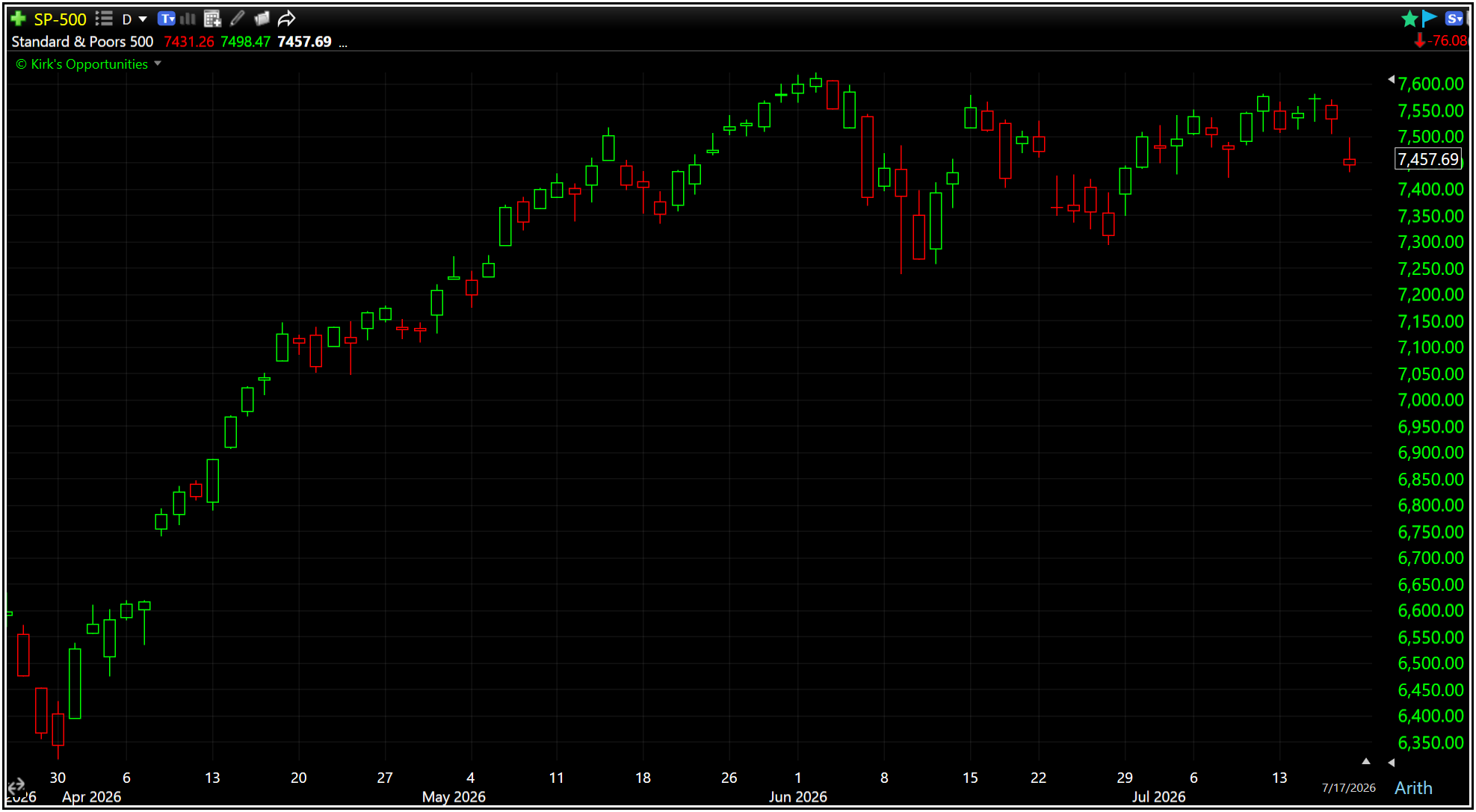
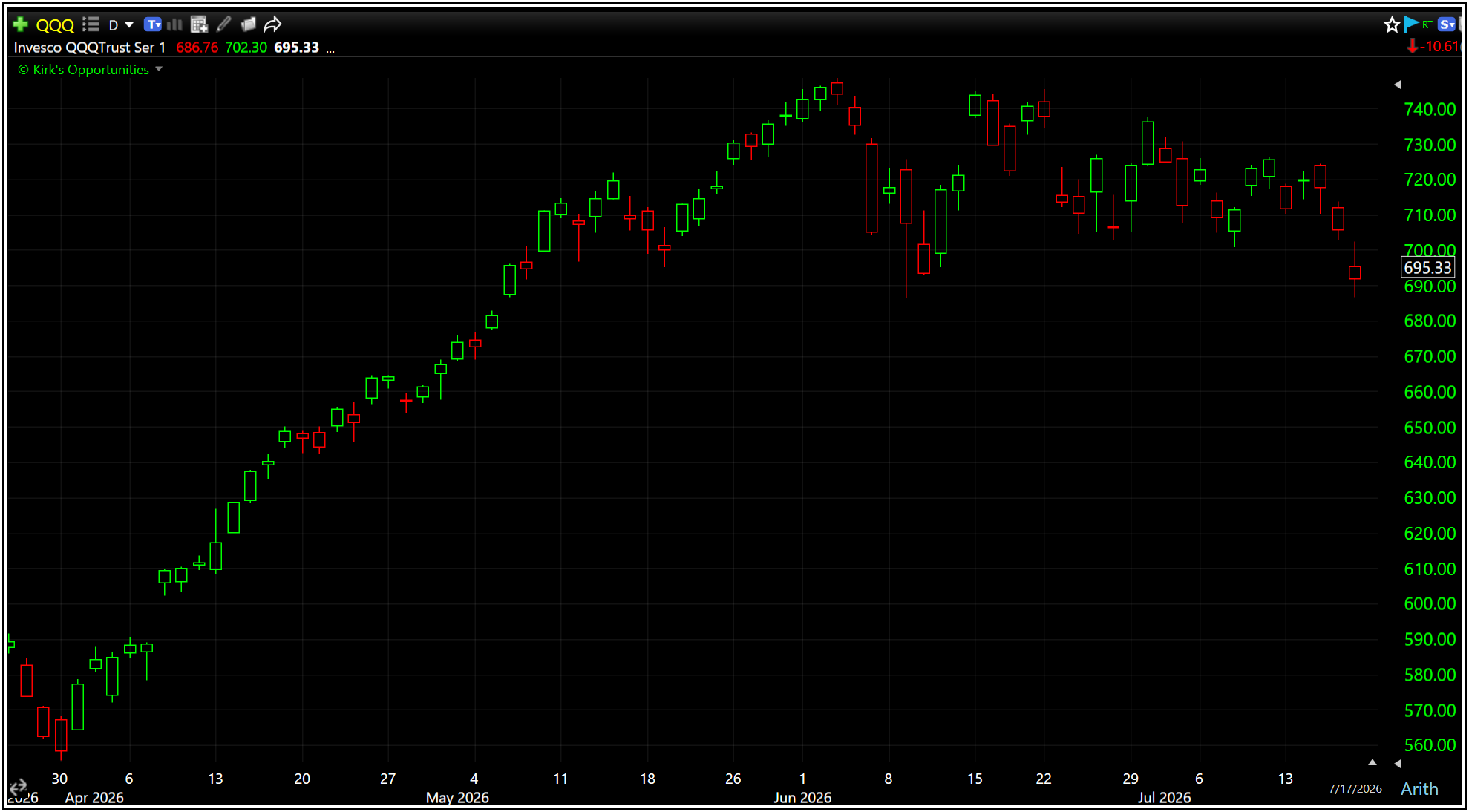
What looked one week ago like a market preparing to break out now appears more likely either to remain trapped inside the range for longer or, particularly in the Nasdaq 100, attempt a breakdown first.
It brings to mind a familiar quote shared many times over the years:
“Markets will do the most obvious thing in the least obvious way.”
- Linda Bradford Raschke
The market may ultimately reach the outcome many investors expect, but it often gets there through enough reversals, false breakouts, volatility, and frustrating detours to shake people out along the way.
Last week, all four were on display.
The major indexes failed to break above their multi-week ranges and then threatened a much deeper retreat.
Exceptionally strong earnings reports were sold.
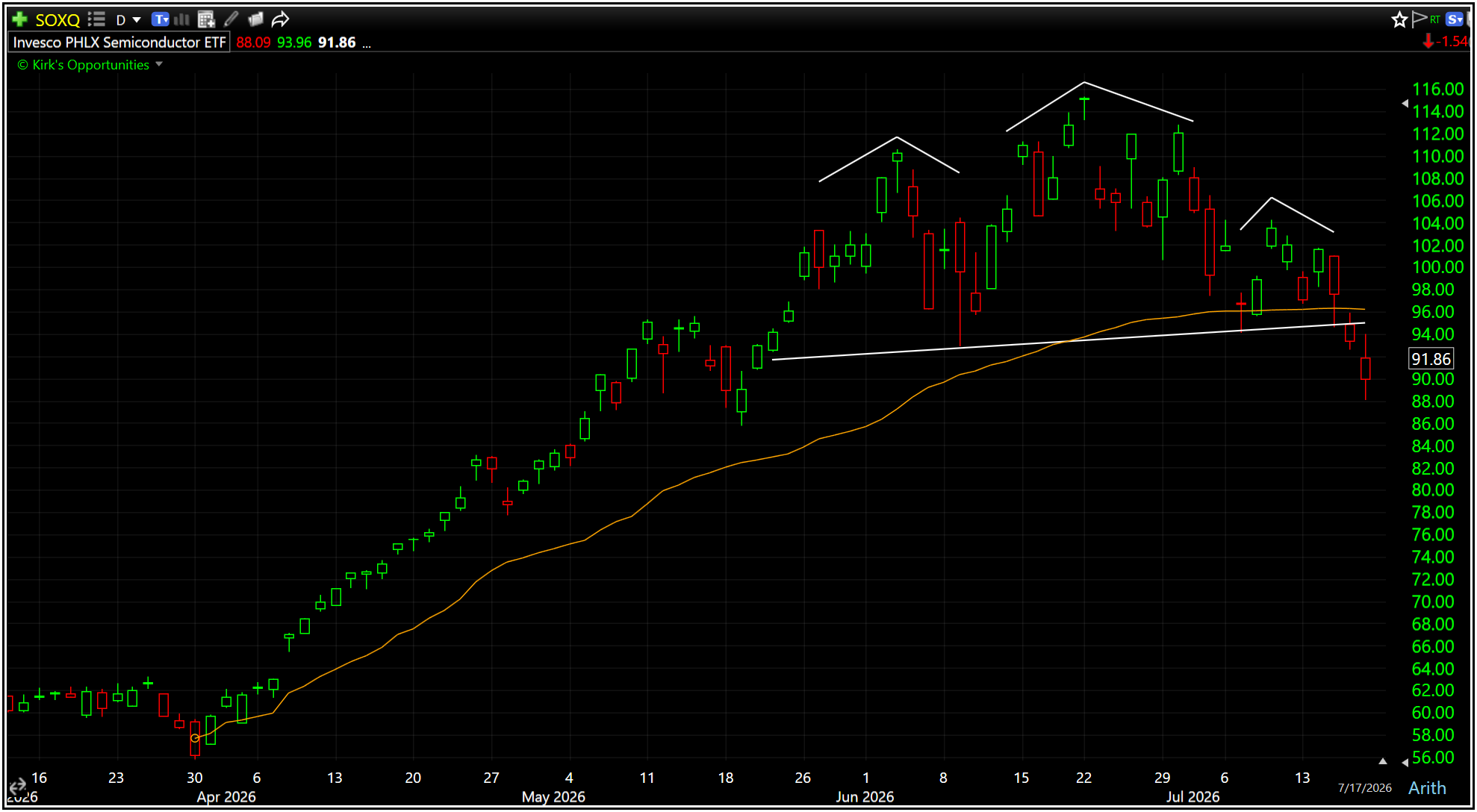
The market’s primary leadership sector, semiconductors, broke down under increasing selling pressure. The PHLX Semiconductor Index fell approximately 10% for the week and finished 20% below its June 22 record closing high.
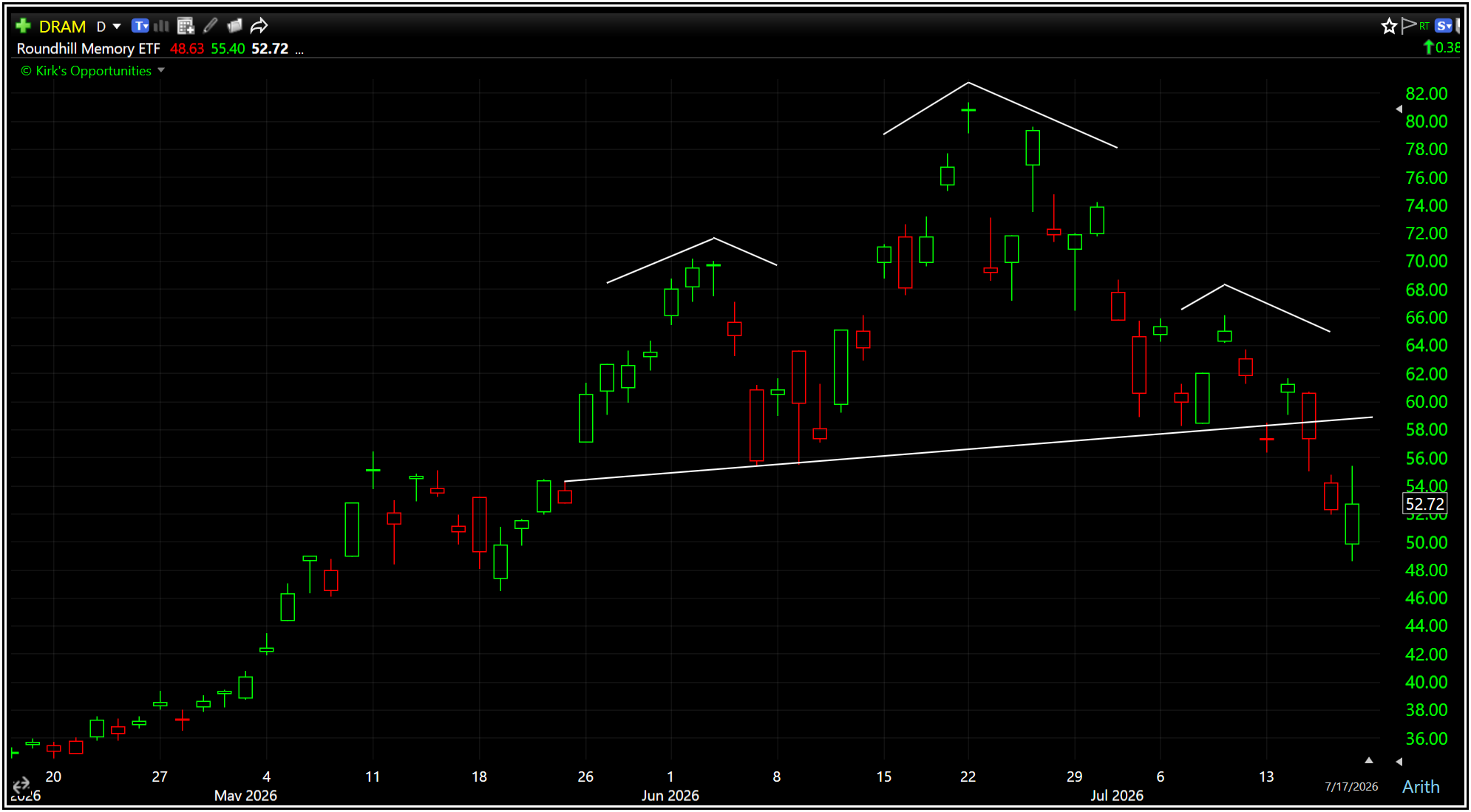
Memory stocks and several other former leaders of the AI trade suffered even greater corrections. Micron, SanDisk, Seagate Technology, and SK hynix experienced some of the most aggressive selling. The magnitude of the declines was notable because memory companies had benefited from strong pricing, AI-related demand, and optimistic expectations surrounding high-bandwidth memory.
The key question is whether this is primarily an unwind in extended and overleveraged stocks or whether the market is beginning to anticipate:
Slower memory pricing gains
Additional future supply
Greater competition
Lower long-term margins
Reduced hyperscaler capital spending
More efficient AI models requiring fewer resources
The group may eventually provide excellent opportunities.
Falling prices alone do not create a confirmed entry, especially when there are bearish reversal plays in motion.
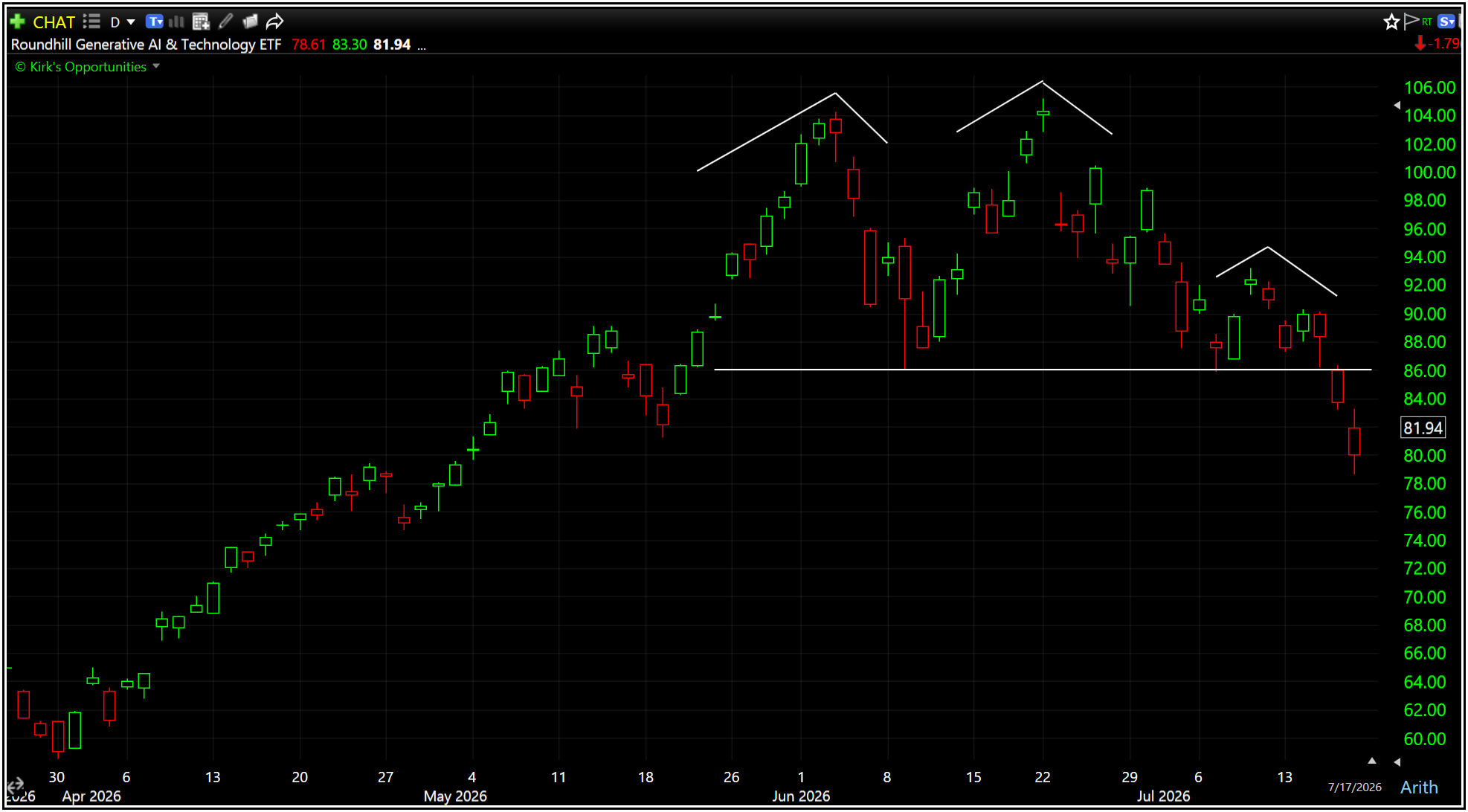
Last week’s expectation that improving price action could lead to an upside breakout proved too optimistic. The setup was constructive, but it required confirmation above the June high. That confirmation never arrived.
Instead, semiconductor leadership deteriorated, the Nasdaq and S&P 500 fell below their 50-day moving averages, and strong earnings repeatedly produced weak price reactions.
Last week’s upside targets were conditional on a confirmed breakout. The market never provided that confirmation.
The bulls had their chance. They did not finish the job.
Yet the weakness did not take the entire market down with it.
Much of the capital leaving technology rotated into financials, health care, energy, real estate, consumer staples, transports, and other areas beyond the AI trade.
That rotation remains one of the most important reasons the broader market has not experienced a full breakdown.
The market is correcting its most speculative and leveraged excesses while, so far, preserving much of the broader structure.
That process has been painful for anyone who was heavily positioned in former leadership and slow to adjust. However, wringing out speculators, reducing leverage, resetting valuations, and replacing weak holders can ultimately place the market on firmer ground than if those excesses had continued building.
The central question is whether this remains a concentrated leadership reset or begins spreading into broad liquidation.
