


After gaining more than 20% over nine straight weeks in April and May, the markets have mostly remained stuck in consolidation mode.
Consolidation through time, rotation and dispersion.
Yet, despite all the concern, the S&P 500 is down only 2.7% from its June 2 high.
That may be hard to believe for investors whose portfolios have been taken down by stocks connected to artificial intelligence—including semiconductors, robotics, quantum computing and nuclear energy—as well as alternative energy, cannabis, space and airlines.
At the same time, this consolidation has been much kinder to those who were more diversified and less concentrated in the speculative, highest-growth areas of the market.
Exposure to commodities, energy, financials, real estate, healthcare, insurance and utilities has proven quite helpful this July.
As pure-growth, high-beta and momentum stocks have been getting clocked, good old boring stocks offering value, dividends and lower volatility have prospered.
Exposure outside the United States, especially in China, Hong Kong and Singapore, has also been profitable. That has been particularly true for those who were stopped out early from their South Korea exposure, which has dropped 30% from its June high in only five weeks.
Sometimes it works this way.
Especially after a long stretch that tremendously favored concentration and massive speculation over diversification.
In the last report, I said earnings reactions would likely determine whether the market breaks out or breaks down. That message still holds true this week.
The next batch of earnings reports includes Microsoft, Meta, Amazon and Apple. Unfortunately, we continue to see a market in which good news is being sold.
The Fed also meets Wednesday. GDP and PCE inflation arrive Thursday. The Iran war—and its effect on oil prices and Treasury yields—will be watched closely as well.
The market has spent weeks searching for something powerful enough to force it out of this range.
This week should reveal whether rotation continues rewarding those who are diversified or begins shifting back toward the stocks that have corrected sharply this July.
How The Week Unfolded
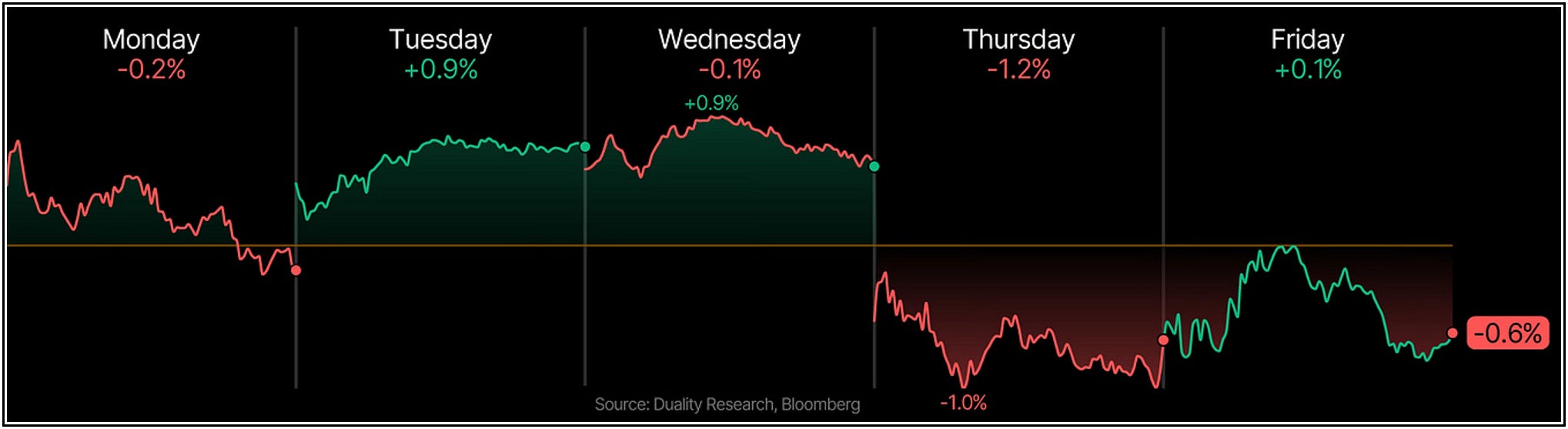
Monday: Stocks initially attempted to rebound, but the move faded as oil prices and Treasury yields rose. Growth stocks finished under pressure.
Tuesday: Semiconductors snapped back sharply, led by memory and AI infrastructure stocks. The PHLX Semiconductor Index gained 5%, briefly suggesting the momentum selloff might be done.
Wednesday: Trading slowed ahead of Alphabet and Tesla earnings. Semiconductors held up, but software and mega-cap growth remained weak.
Thursday: Alphabet and Tesla shifted the market’s attention from headline growth to spending, margins and cash flow. Growth stocks sold off as oil and Treasury yields moved higher.
Friday: Broader participation improved as oil and yields eased, but another semiconductor reversal kept the Nasdaq under pressure.
Last Week’s Top 10s
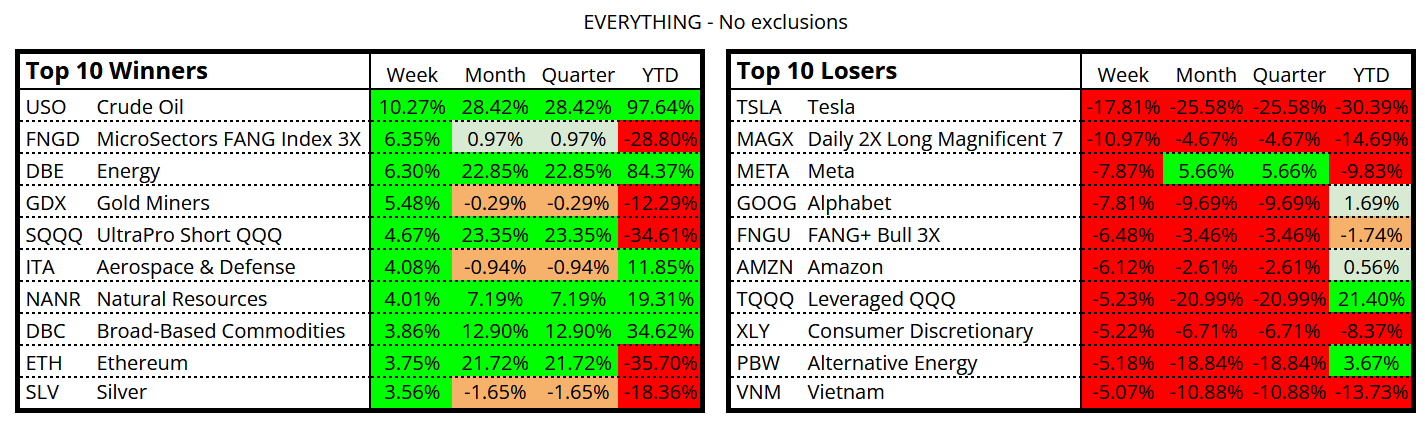
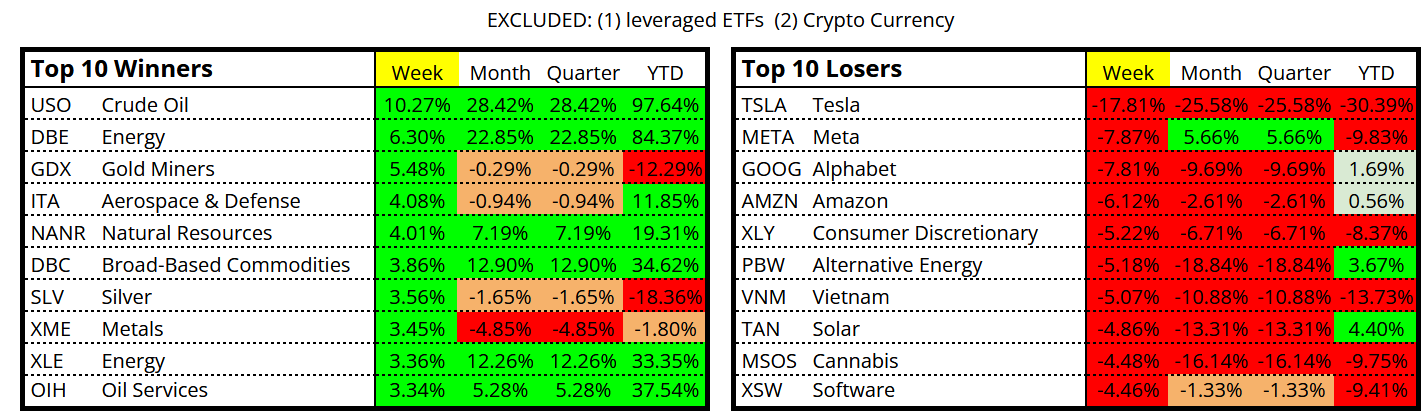
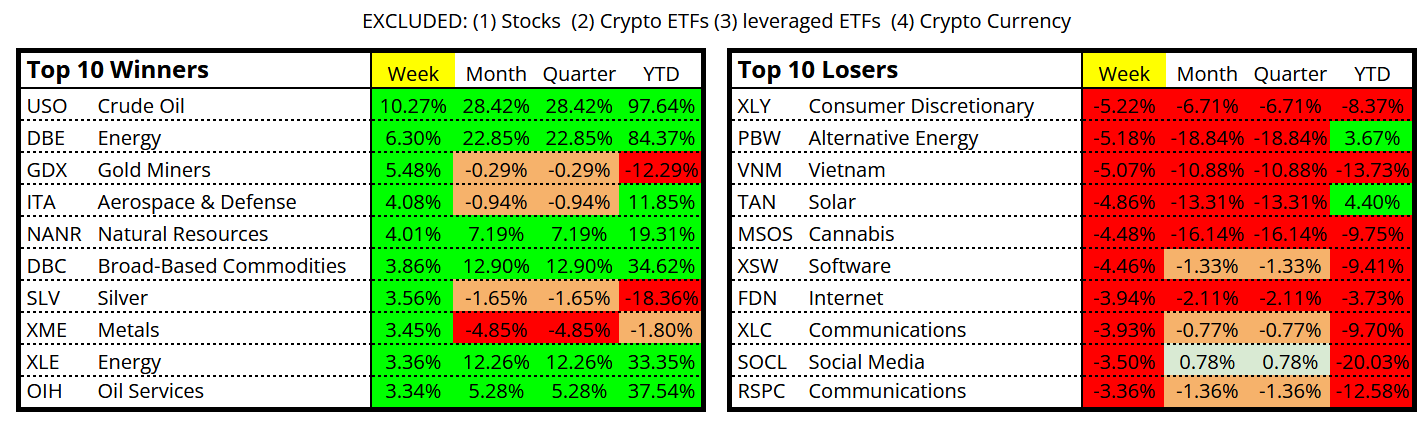
The contrast is hard to miss. Crude oil, energy, commodities, metals and defense dominated the winners, while mega-cap growth, consumer discretionary, software, alternative energy and other speculative areas absorbed most of the damage.
That is what rotation and dispersion look like in practice. The S&P 500’s relatively modest decline concealed a much more aggressive transfer of leadership underneath the surface.
The Price Action
S&P 500
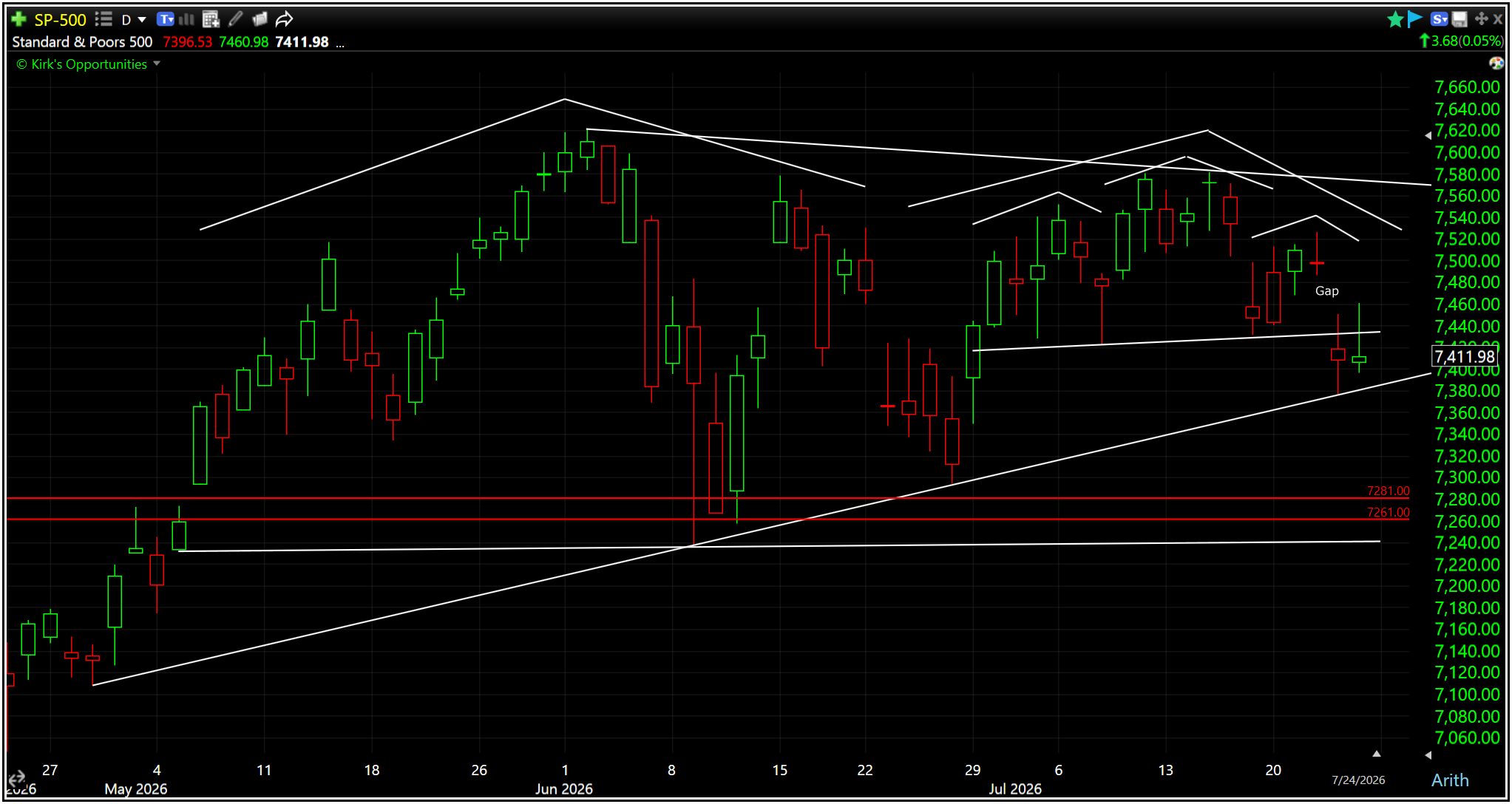
The S&P 500 has continued coiling within its consolidation range.
My top priority remains whether price breaks above the June high or below the June low and, more importantly, whether that break receives strong and sustained follow-through.
Within the coil, however, another short-term setup caught my attention last week - a new bearish head-and-shoulders pattern targeting 7,281 and 7,261.
If price follows through lower rather than trapping sellers with an upside gap fill, this setup would lay the foundation for a retest of the June low. By extension, that could complete a larger double-top-like formation.
It is important that we do not see it play out that way this week.
Nasdaq 100 (QQQ)
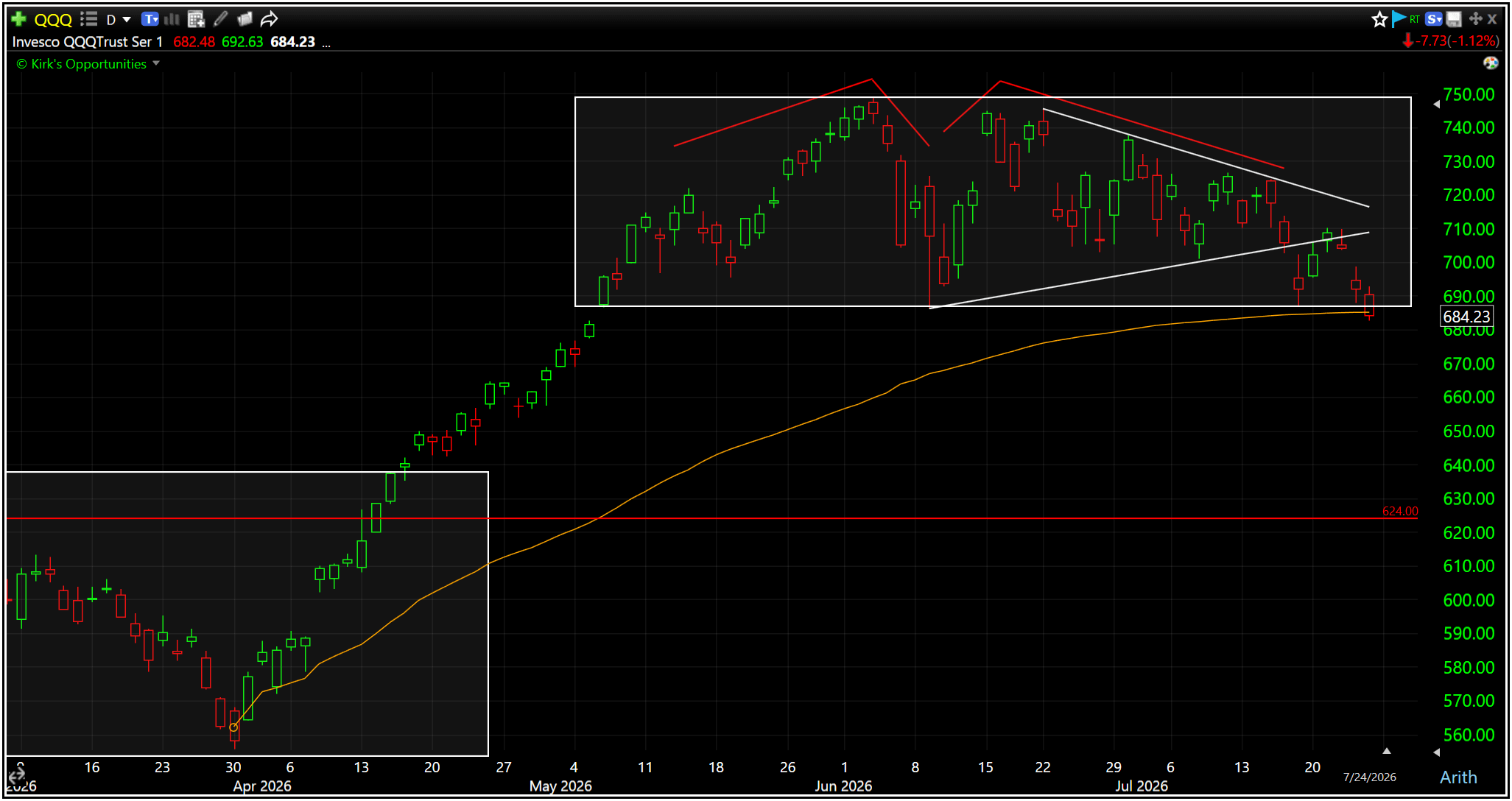
After the coil broke lower and price tested the June low, QQQ attempted to bounce last week.
The bounce failed. Price finished the week just below the prior June low and its anchored VWAP, or AVWAP, from the March 30 low.
This is a critical area for price to defend this week.
If the new bearish double-top and range-breakdown setup receives strong and sustained follow-through toward its $624 target, the current 8.6% pullback could extend to 16.7%.
Magnificent 7 (MAGS)
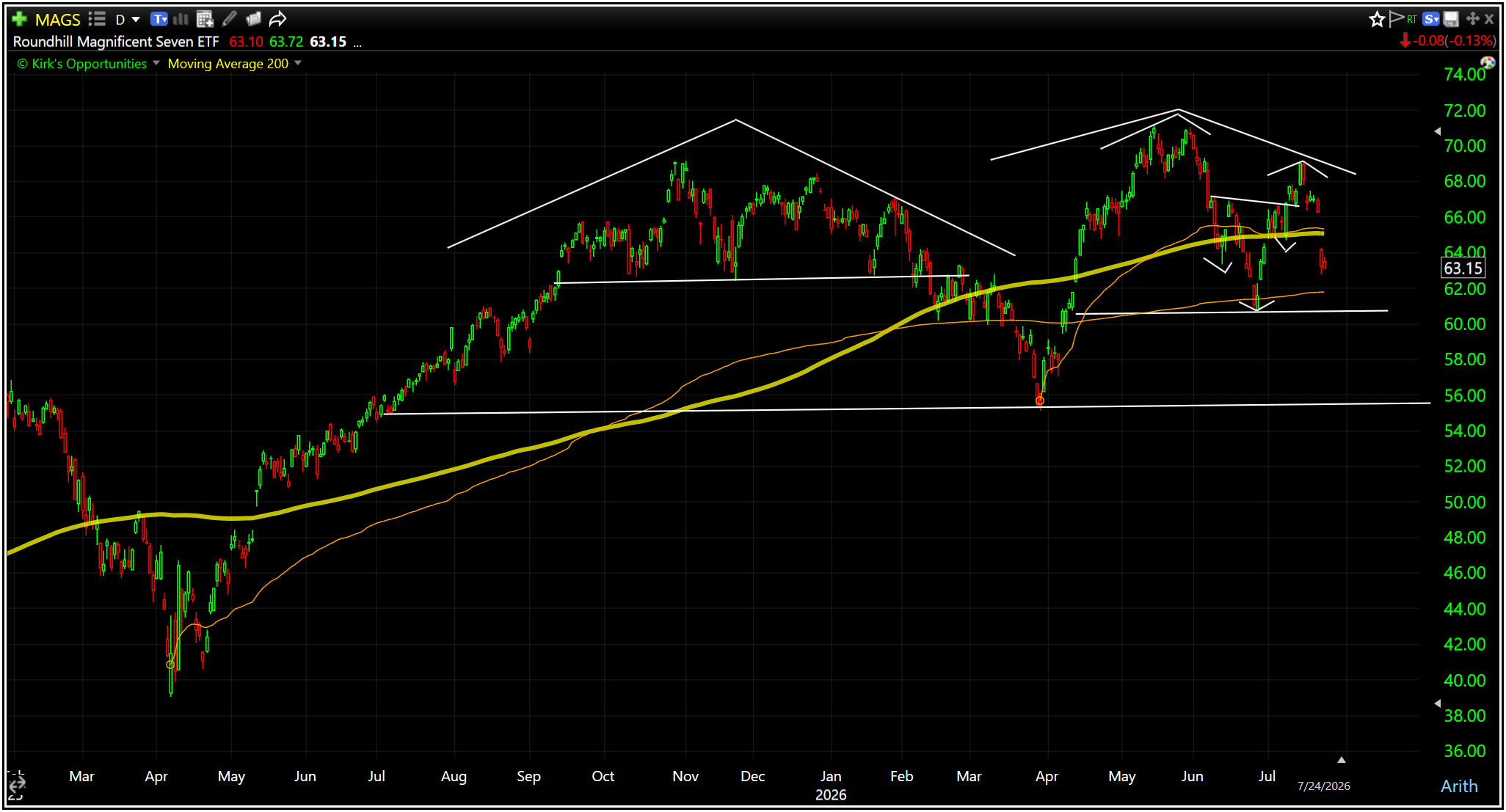
The price action continues to show significant deterioration.
Last week, MAGS fell back below its 200-day moving average, with a potential new double-top formation under construction.
For the Nasdaq 100 to trap last week’s breakdown and, by extension, for the S&P 500 to trap its own reversal within the coil - Microsoft, Meta, Amazon and Apple need to produce much better earnings reactions this week.
Semiconductors (SMH)
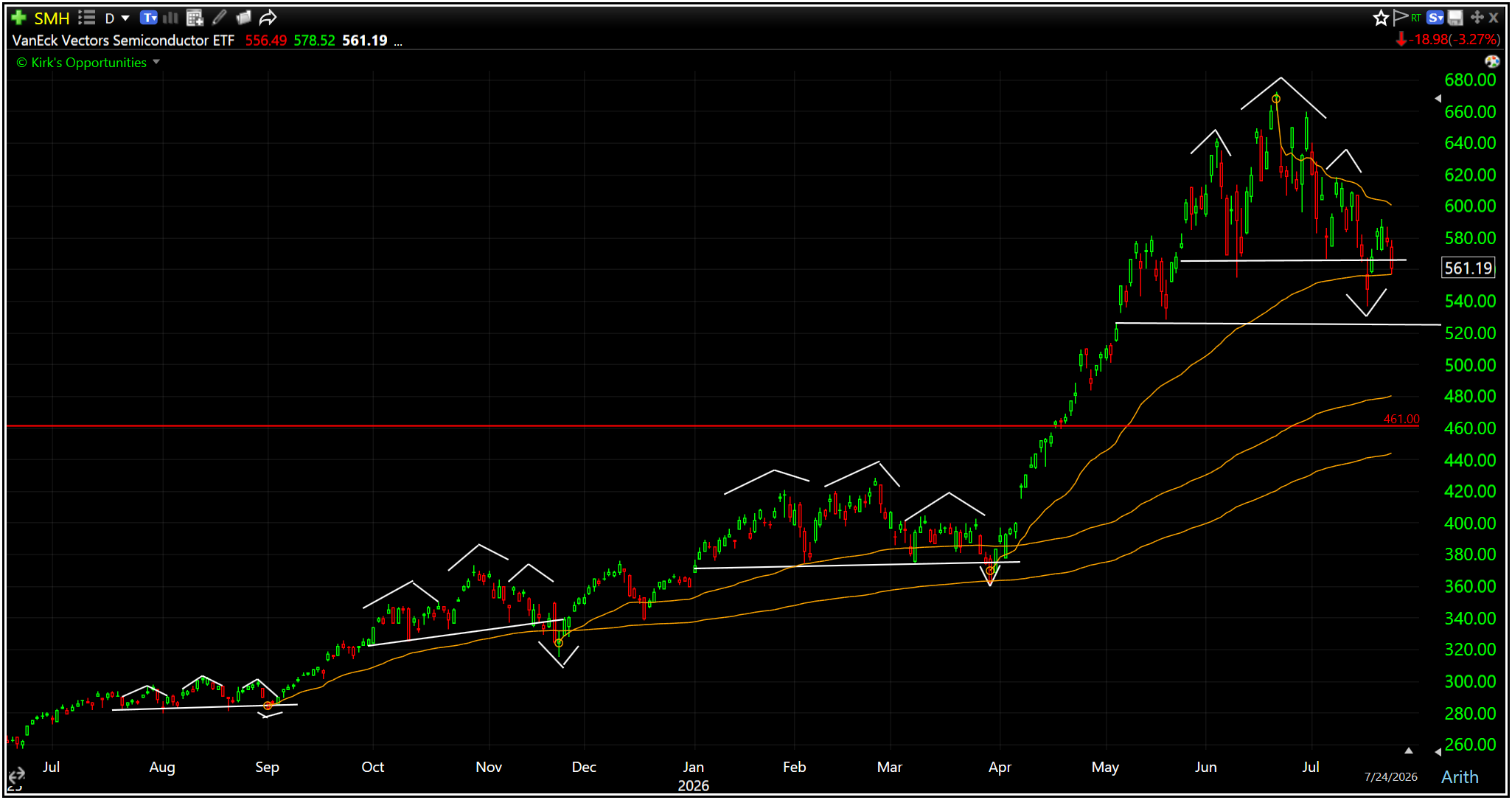
After its historic rally from the March bear-trap low to the June 22 high, SMH has been correcting and consolidating.
Price is now testing an important neckline area near its AVWAP from the March low. A new bearish reversal setup targets $461 if support breaks and receives follow-through this week.
Notice that this is the same general setup we have seen three times over the past year. Each previous occurrence developed near the end of a pullback before the next upswing began.
Will the fourth time produce the same result?
I would not bet the farm in either direction. After such a historic rally, SMH has earned more time to consolidate before its next sustained move becomes clear.
Russell 2000 (IWM)
Up 18% year to date and still the best-performing major index this year, IWM is testing and defending its AVWAP from the May low.
This is an important pivot area to watch - not only this week, but over the next several weeks.
The coil could still break lower, putting the bearish head-and-shoulders reversal setup and its $278 target into motion.
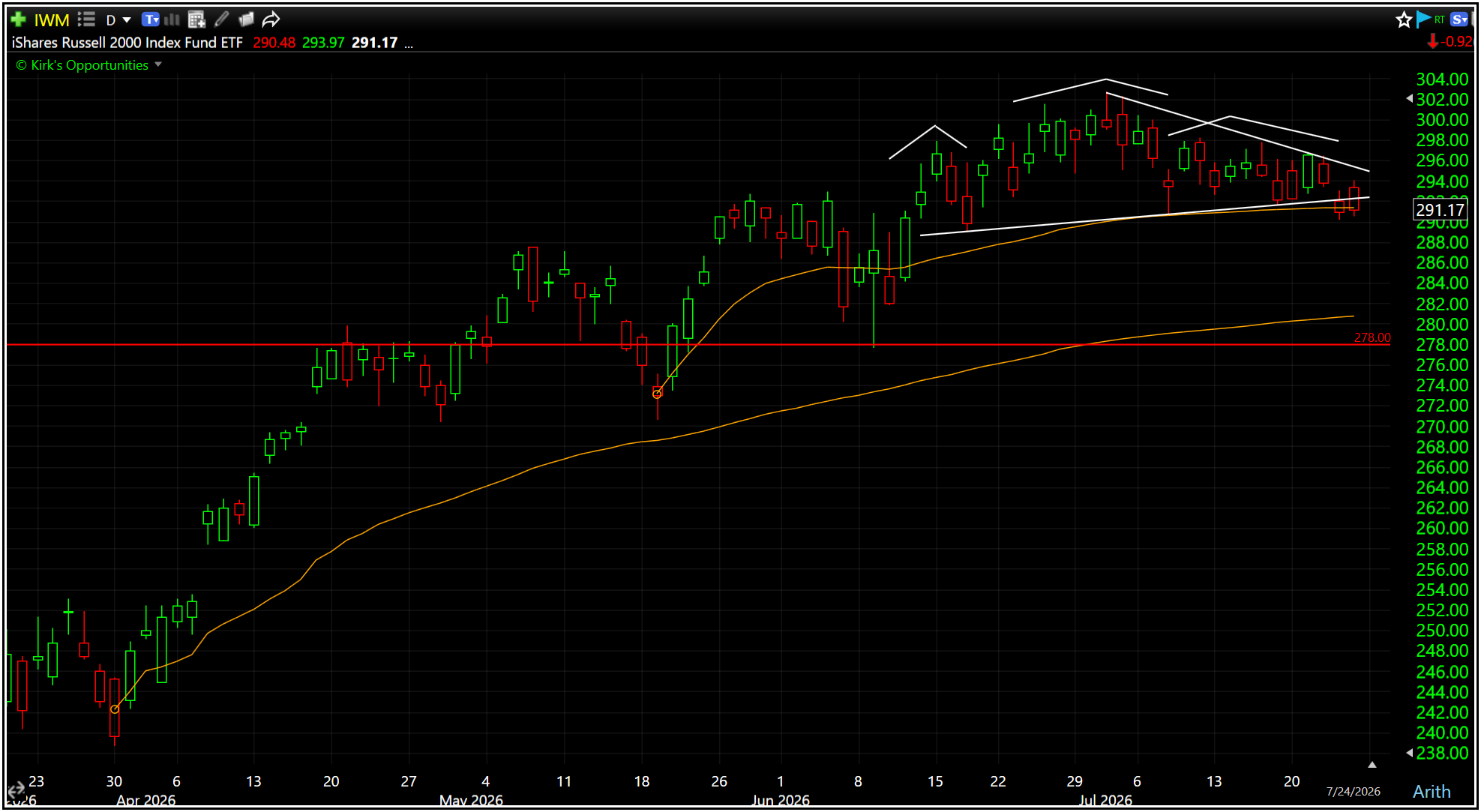
The charts have already drawn the bearish roadmap. Now sellers have to prove they can follow it.
A head-and-shoulders pattern is not a breakdown. A target is not a destination. Until price follows through and holds below support, the market can still pull the same trick it has used repeatedly—shake everyone out, trap the bears and reverse higher.
Bears have the setups. They do not have confirmation.