

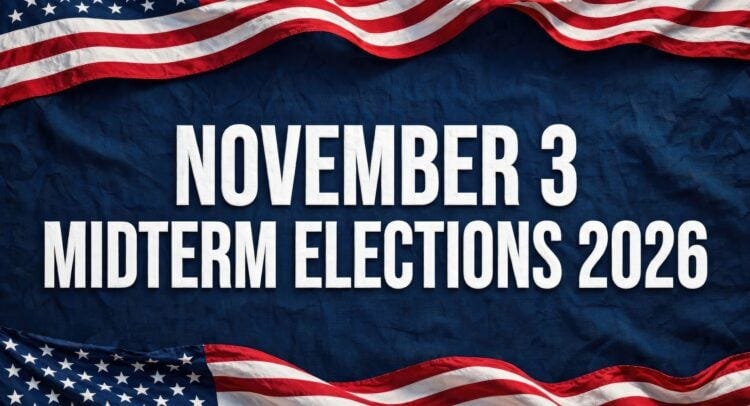
Let’s begin with a few studies about markets and this mid-term election.
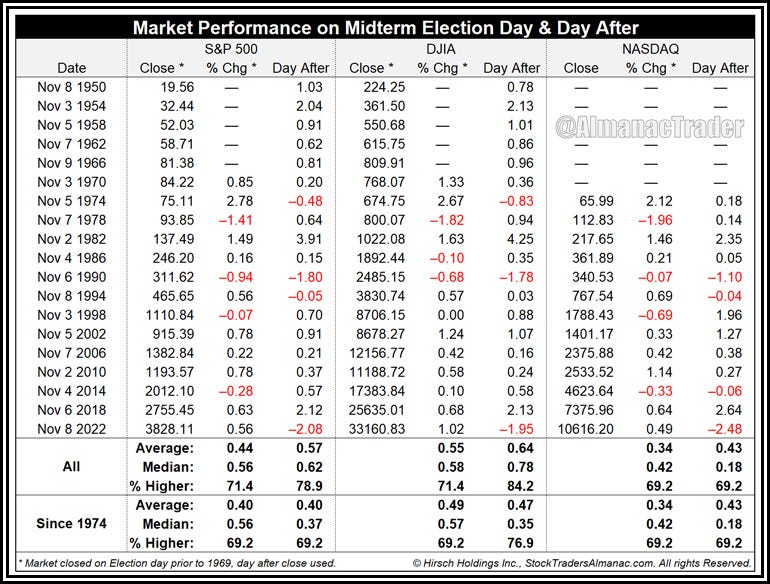
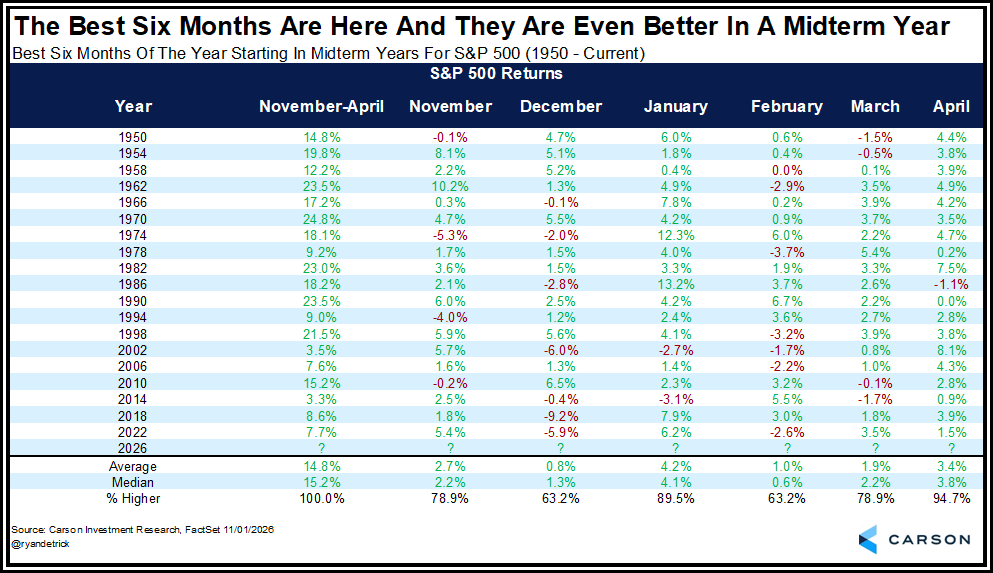
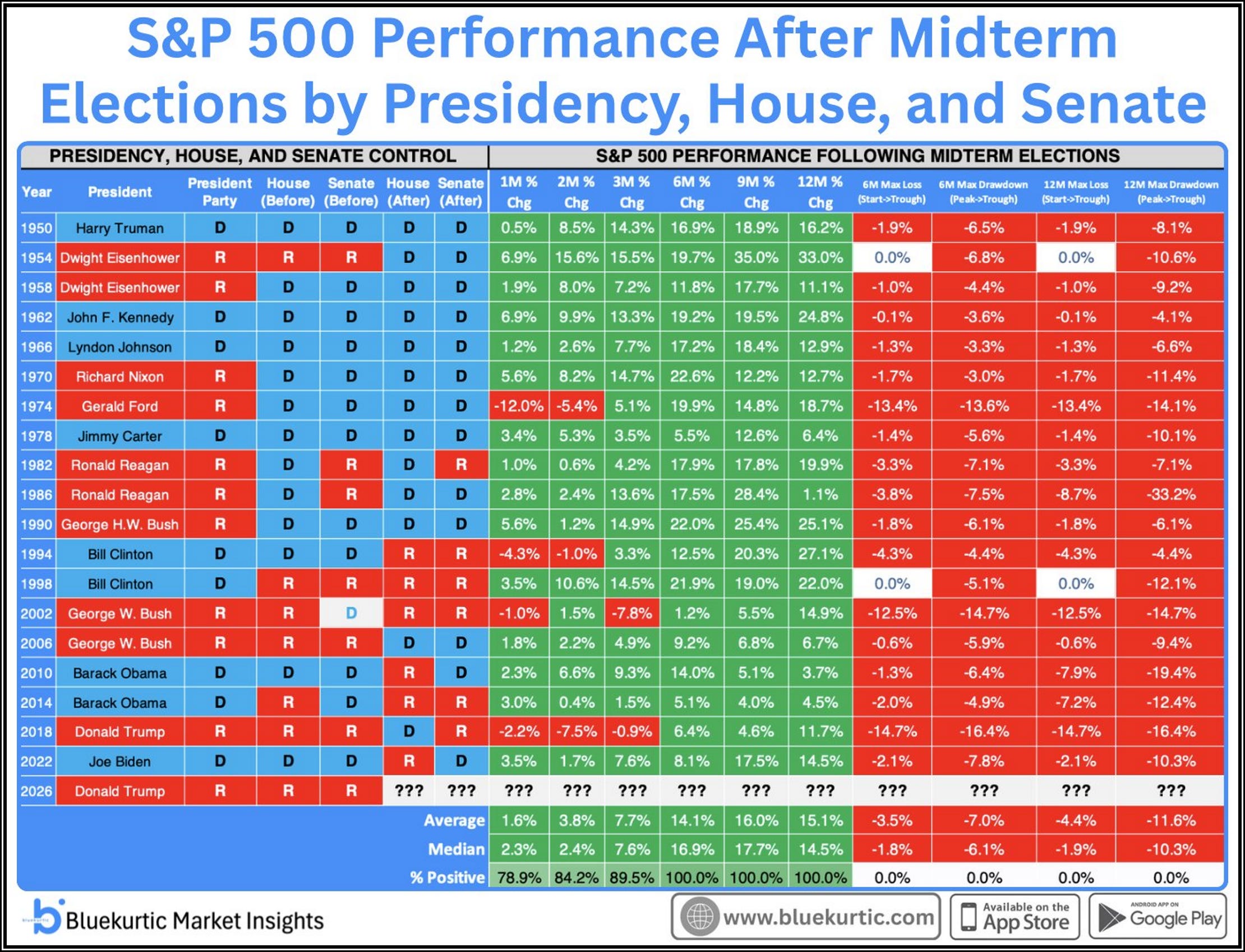

Tom Lee remains optimistic that stocks can finish 2026 strong despite October’s correction and the long list of worries weighing on investors. He thinks markets don’t need all their problems resolved to rally. Sometimes, simply removing uncertainty is enough. With the midterm elections, important earnings, and economic data ahead, the question is whether the recent selling has created the conditions for a stronger year-end advance. (CNBC INTERVIEW & SUMMARY)
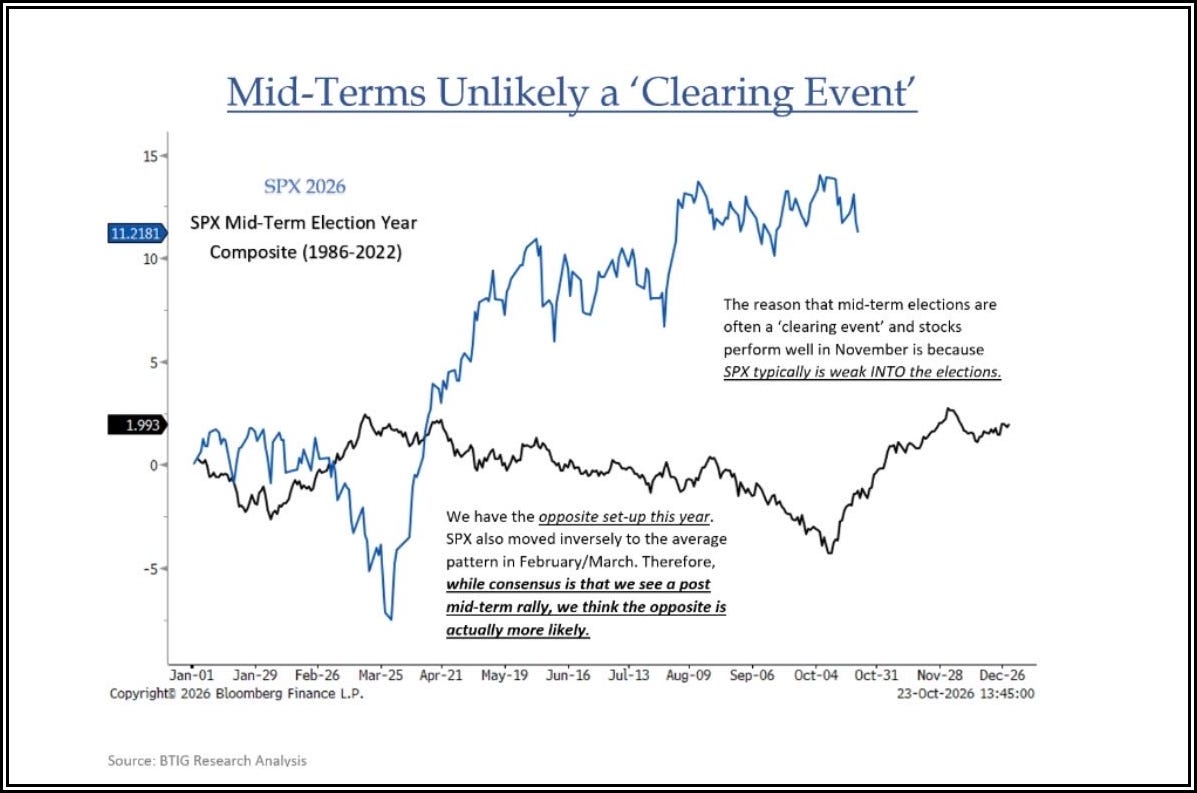
According to Jonathan Krinsky at BTIG, the mid-terms haven’t been a clearing event because the market simply hasn’t fallen enough. (He must only be monitoring the indexes apparently!) JK thinks the S&P 500 will test its 200 day moving average at 7300 (like many chartist) following the small/mid caps, transports, semis, and many sectors already before buyers will return to potentially buy this dip!
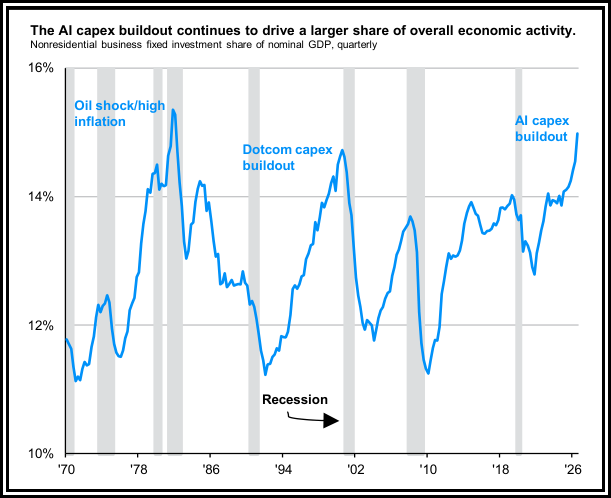
For now, economic growth continues to be all about the AI buildout. But while the AI buildout’s impact on economic growth is evident, the payoff for the hyperscalers making the investments is less clear. The three major hyperscalers that reported earnings last week each described strong AI demand and growth in their cloud businesses, but much of that growth may already be priced in. Investors are focused not only on whether these companies can beat earnings expectations, but also on how quickly they can monetize their investments and generate positive cash flow. Their ability to do so will shape how the market views them. With both the economy and markets riding on the same AI theme, it’s increasingly important for investors to reduce concentration in their portfolios and diversify into less AI-exposed areas, such as Europe or real assets. (JPMorgan)
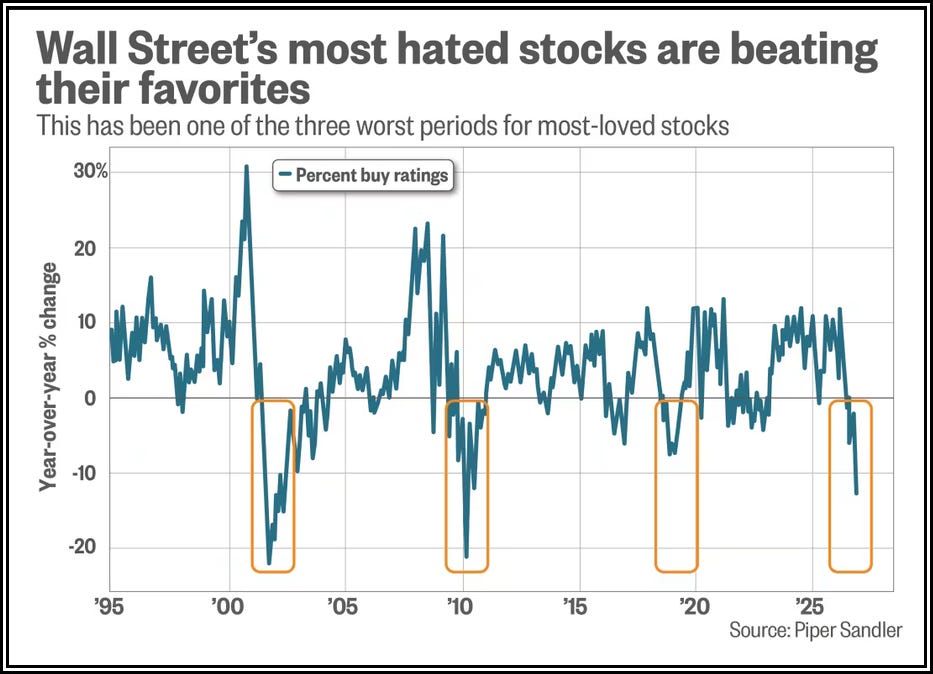
Wall Street’s favorite stocks with the highest percentage of buy ratings are being badly beaten by the most hated names with the lowest ratings. An extreme reversal in stock-market leadership suggests investors are reassessing crowded trades, earnings expectations, and the economic outlook. The same historical pattern has appeared during both major market downturns and powerful recoveries. The direction of the broader market, earnings revisions, and improving leadership will determine which interpretation fits. (MarketWatch)
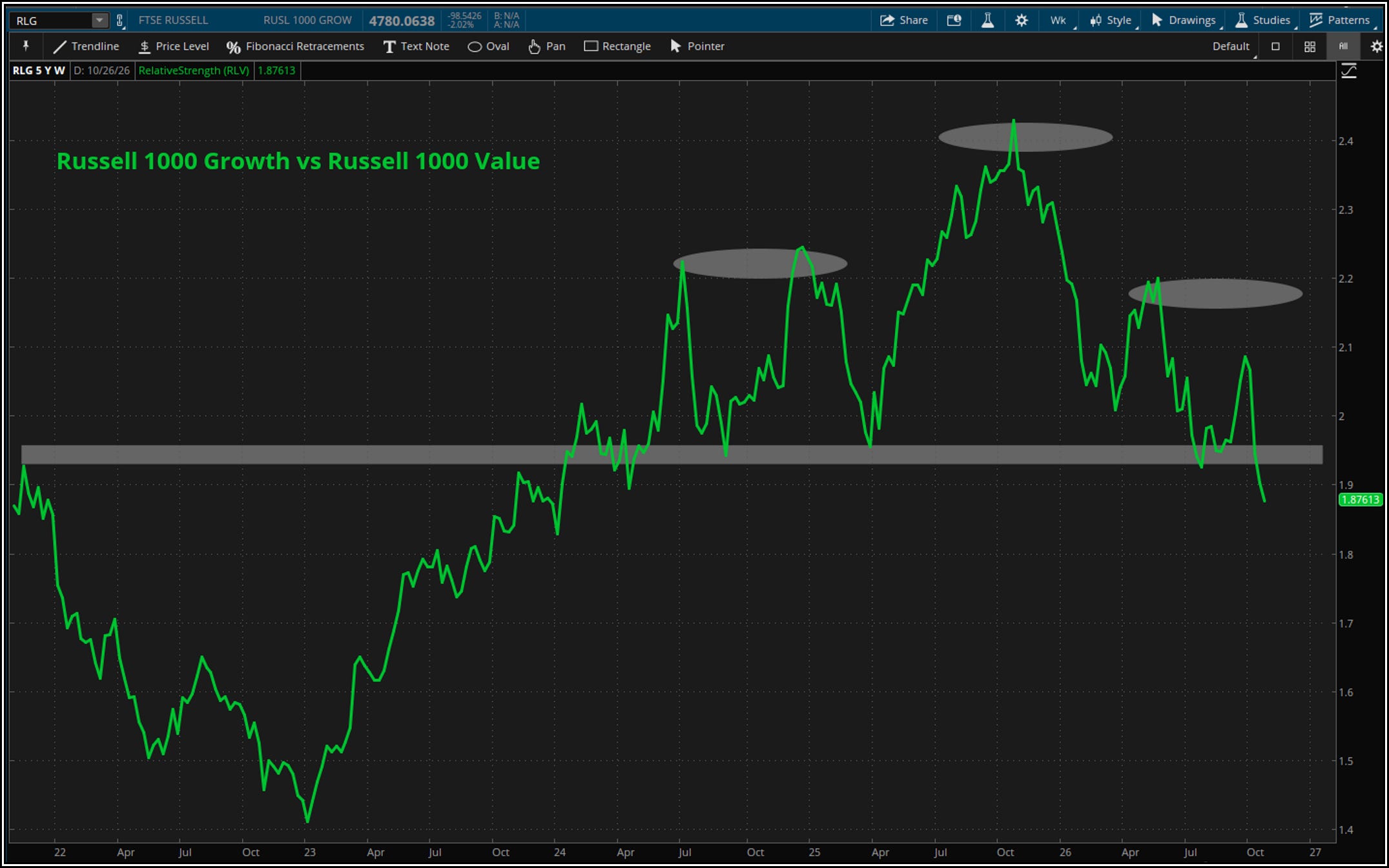
Growth-to-value rotation could represent a lasting leadership change. The Russell 1000 Growth/Value relative-strength ratio has broken important multiyear support. Energy, Healthcare, Consumer Staples, Utilities, Financials, and Industrials are showing improving relative strength. The important distinction is whether this is healthy rotation within a continuing bull market or a more defensive transition. Additionally, Ms. Rachel shares a number of charts including the double-top reversal we’ve been keeping an eye on as well! (Rachel Dashiell, Charles Schwab)
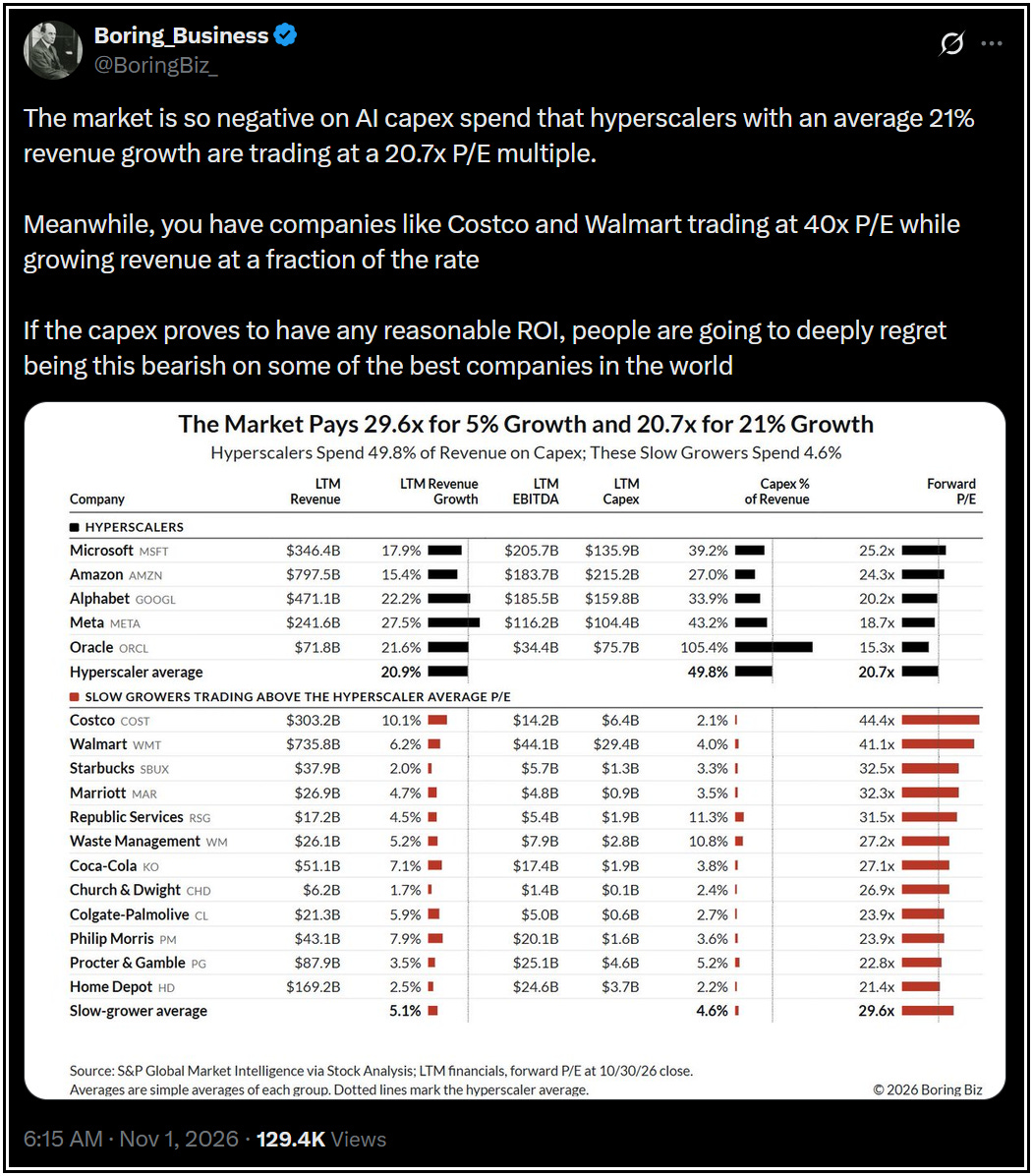
A good counter-point to the prior technical observation suggesting that growth is likely to continue to underperform value. Especially when value is getting more expensive. Yes, valuations can remain out of whack for long periods of time, especially in this market, but something to consider if you are selling the hyperscalers to shift back into the slower growers. (Boring Business)
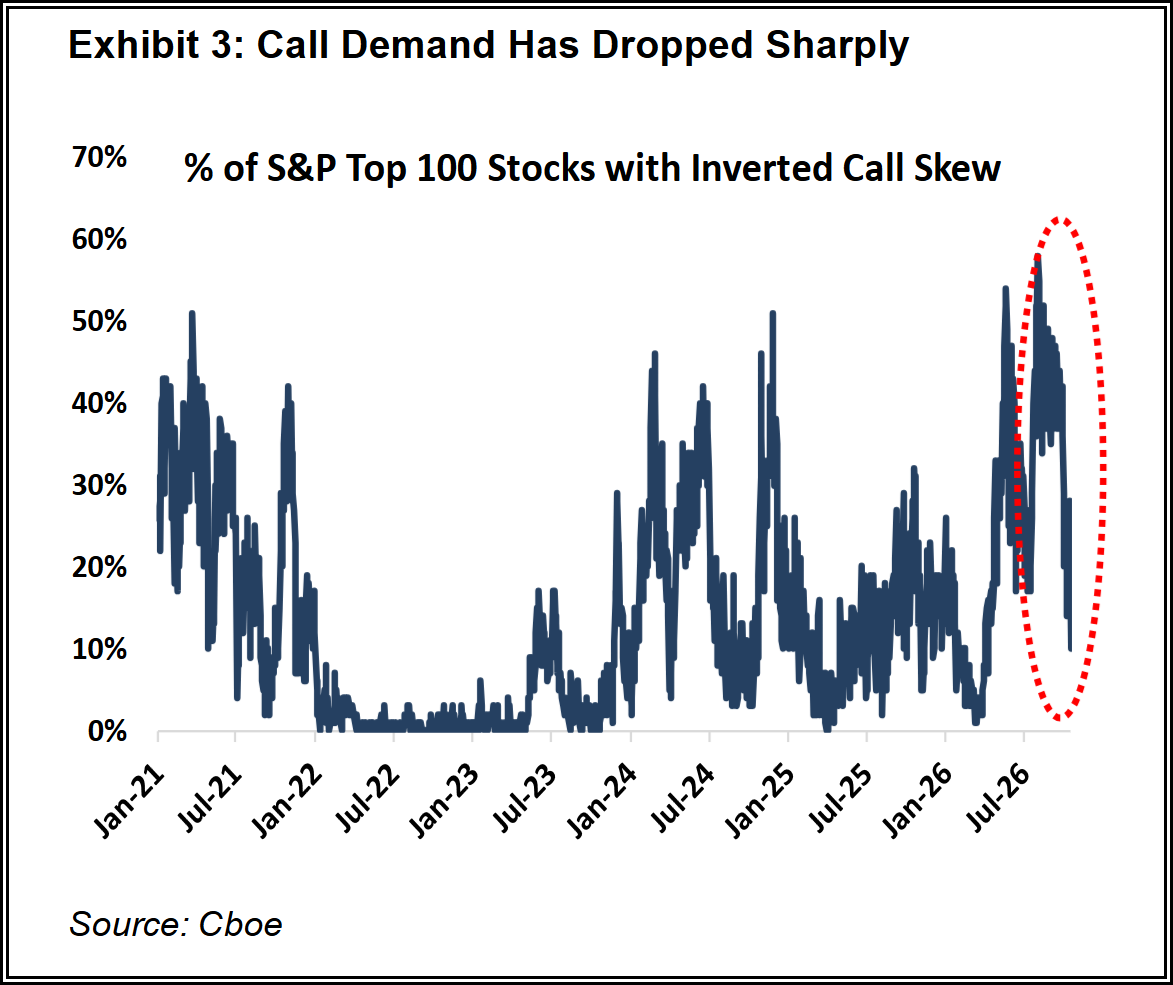
Positioning in single stock options has also shifted notably, with call demand dropping sharply and hedging demand increasing. The percent of stocks in the S&P top 100 trading with inverted call skew (a sign of extreme bullish sentiment) has fallen from a high of 44% in early October to just 10% now. Looking at retail flow on Cboe’s exchanges, retail put buying in the mega-cap Tech stocks hit a year-to-date high last week, accounting for 34% of all opening trades (vs. average of 24%). (CBOE Macro Volatility Digest)
Potential Catalysts
Tuesday, November 3
U.S. Midterm Elections: Congressional control and implications for fiscal, regulatory, energy, and technology policy.
AMD Earnings, After the Close: AI accelerator demand, data-center revenue, margins, and guidance.
Arista Networks Earnings: Networking demand and cloud capital-spending trends.
Shopify and Pfizer Earnings: Consumer and healthcare business conditions.
Apple and Palantir: First full regular-session reactions to Monday’s earnings.
Wednesday, November 4
ADP Employment, 8:15 a.m. ET: Private-sector hiring.
ISM Services, 10:00 a.m. ET: Services activity, employment, and inflation.
Treasury Quarterly Refunding: Bond supply and interest-rate implications.
Qualcomm and Arm Earnings: Semiconductor demand and guidance.
Okta Enters the S&P 500: Potential index-related buying.
Thursday, November 5
Initial Jobless Claims: Labor-market conditions.
Additional Technology Earnings: Further evidence about AI spending and profitability.
Friday, November 6
October Employment Report, 8:30 a.m. ET: Payroll growth, unemployment, wages, and revisions.
University of Michigan Consumer Sentiment: Household expectations and inflation concerns.
The most consequential combination is Tuesday’s election, AMD’s earnings reaction, and Friday’s employment report.
What To Watch Next?
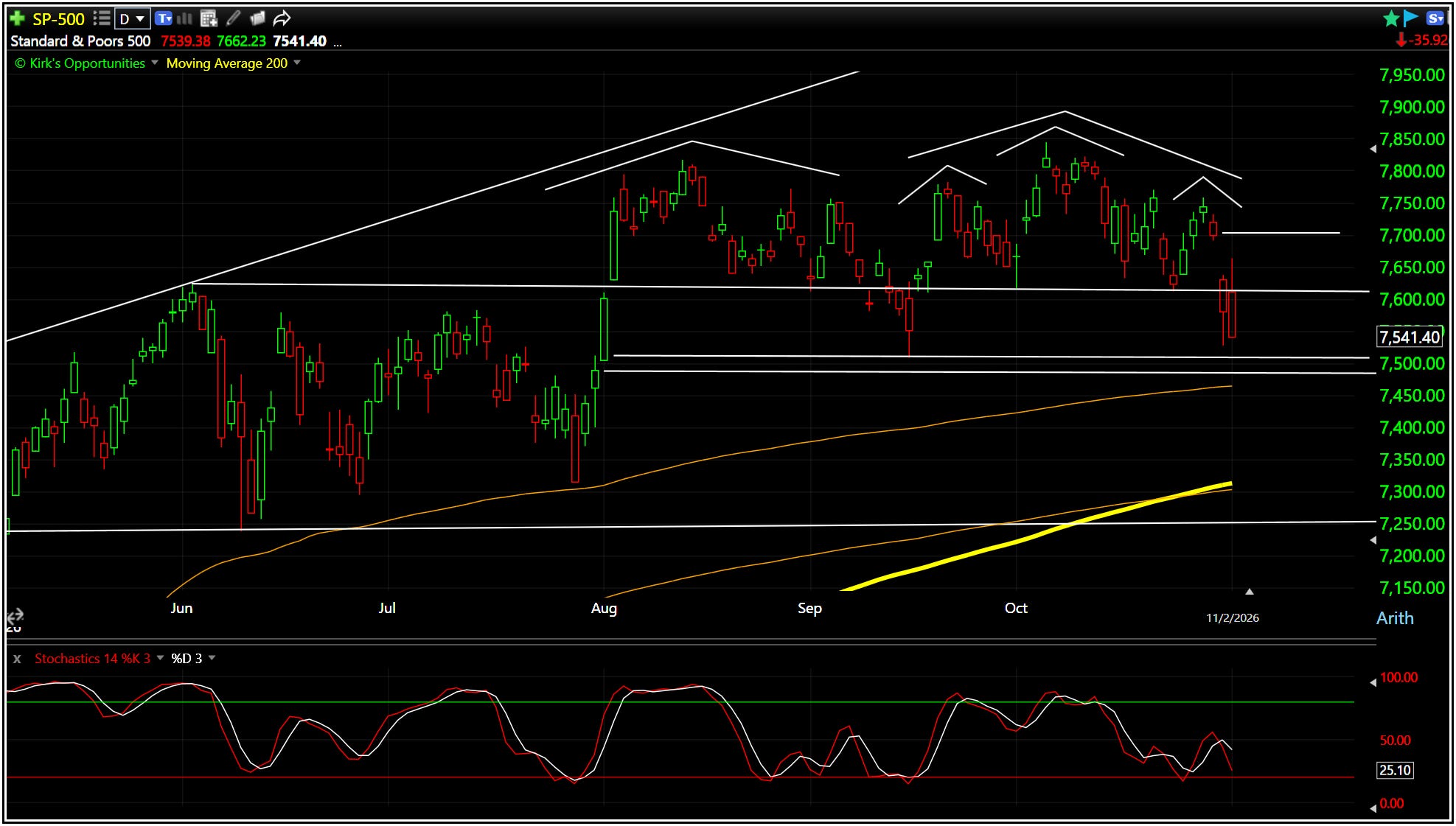
1) S&P Price Action: After Monday’s attempt to set a bear trap failed, we will be watching this head and shoulders, double top bull trap reversal closely. A break of the September low will quickly bring in a retest of the AVWAP from the March low, and beyond that, the mighty 200 day moving average. Where resistant nervous buyers may hold their nose and put money back to work again.
2) Semiconductor Leadership: Do SMH/SPY and SOXX/SPY begin improving, or do rebounds continue failing?
3) Market Breadth: Does positive participation begin translating into sustained gains in the capitalization-weighted indexes?
4) AI Credit: Are financing costs and credit spreads stabilizing despite enormous capital commitments?
5) Earnings Reactions: Will strong Apple, Palantir, AMD, and Arista results produce sustained buying?
6) Post-Election Trading: Does starting to remove political uncertainty encourage investors to rebuild positions?
The most encouraging development would be simultaneous improvement in semiconductor leadership, market breadth, and corporate-credit conditions.
RADAR
Maximum bullish Max Kettner has pulled in his big horns, major market tops often unfold over 8 or 9 months with increased volatility and unstable leadership, why the S&P 500 put buying could be a good sign (but I wouldn’t trade on it), if you want to know where retail investors are investing keep tabs on this ETF’s holdings, like everyone else Ken Griffin also sees a big bubble, sometimes this is the most valuable position in a gold rush, the claim that leveraged ETFs inevitably lose value when held longer than one day can be misleading, a website tracking the most popular AI Models, this is why knowing what to do isn’t going to be enough!
"Politics is the art of looking for trouble, finding it everywhere, diagnosing it incorrectly and applying the wrong remedies." - Groucho Marx