

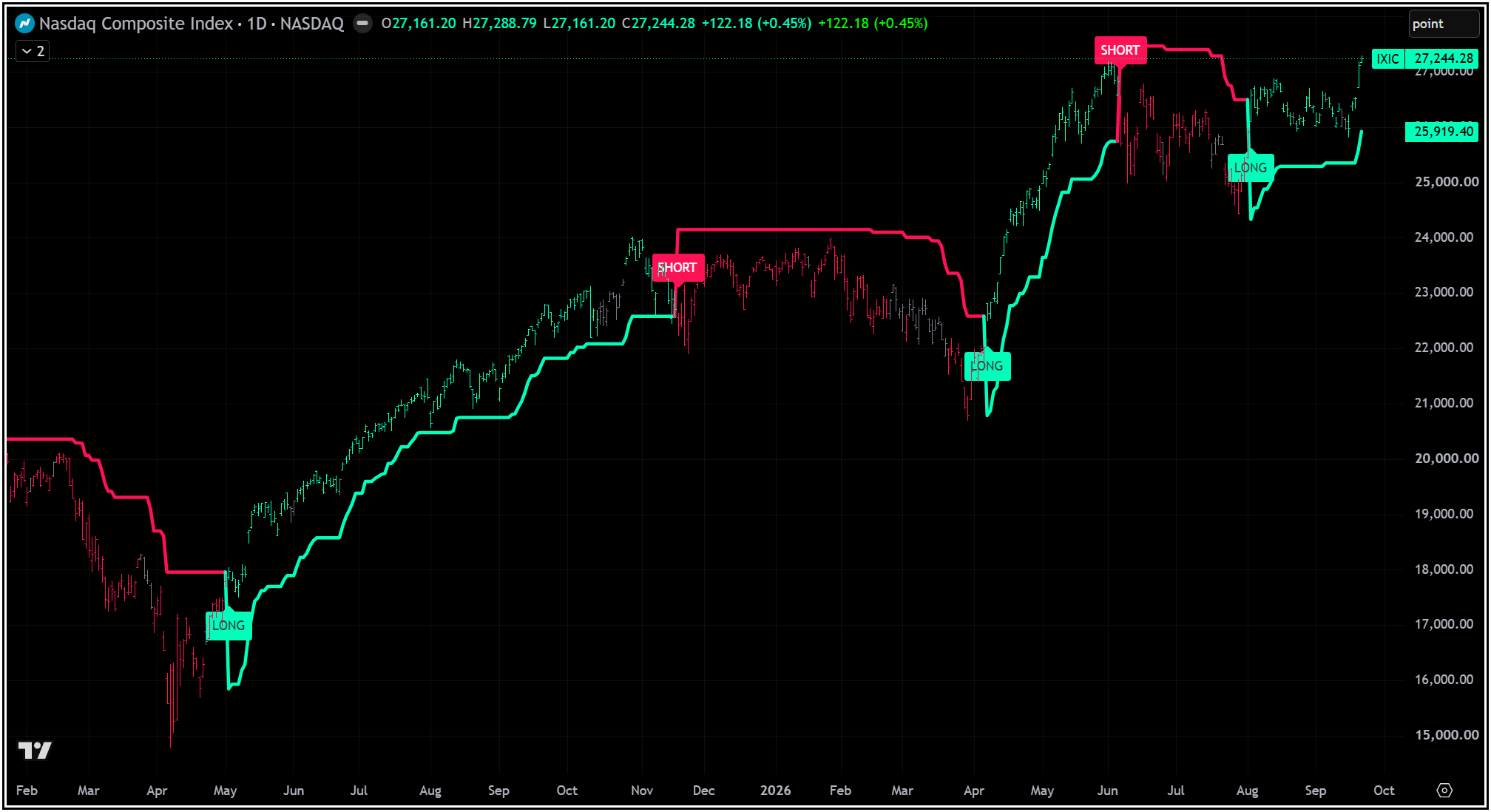
The Nasdaq did its job Tuesday: it followed Monday’s breakout with another gain and closed at a new high. The S&P 500 went nowhere and the Dow declined. Semiconductors, memory and AI infrastructure remain firmly in control, but small caps, midcaps and several non-technology sectors finally showed some life.
That’s where things get interesting. Breadth is still unusually weak for indexes this close to record highs, but some of the biggest obstacles are starting to ease. Oil is falling, the 10-year yield is back below 5%, and small caps are beginning to improve.
The market is not fully repaired. But the setup is getting harder to dismiss.
The next move could tell us whether this remains a narrow Nasdaq story—or starts becoming something much bigger.
THE SCOREBOARD
S&P 500: 7764.64: essentially unchanged
Nasdaq 100: 30640.22: +0.52%
Dow: 51863.69: -0.36%
Russell 2000: 2889.92: +0.51%
S&P MidCap 400: 3664: +0.4%
The indexes, however, missed much of what happened underneath.
WHERE THE MONEY WENT
Semiconductors
The PHLX Semiconductor Index gained roughly 2.1%, extending its run to six consecutive sessions.
Monday’s AI-led surge did not immediately reverse. Buyers continued adding exposure.
Memory & Storage
SNDK, STX, MU were again among the stronger stocks.
Memory and storage increasingly look like another expression of the AI infrastructure trade as inference demand expands alongside compute.
AI Power Infrastructure
MPWR and VICR strengthened sharply.
Power delivery remains one of the less obvious but increasingly important beneficiaries of rising AI compute density.
Beyond AI
Materials, consumer staples, health care and homebuilders also participated, while the Russell 2000 and S&P MidCap 400 finished higher.
AI dominated leadership, but Tuesday was not exclusively an AI rally.
AI LEADERSHIP — STAY WITH THE WINNERS
The evidence continues to favor semiconductors, memory, cybersecurity and selected AI software rather than indiscriminate AI exposure.
Names repeatedly showing relative strength include NVDA, AMD, AVGO, SNDK, MU, SNOW, NET, TWLO, PLTR and selected cybersecurity names.
That does not mean we chase them after several strong sessions.
It means we identify the strongest groups, let extended stocks digest their moves, and look for controlled pullbacks or tight consolidations that give us a better risk/reward entry.
Strong theme does not automatically mean attractive entry.
WHERE THE MONEY LEFT
Financials
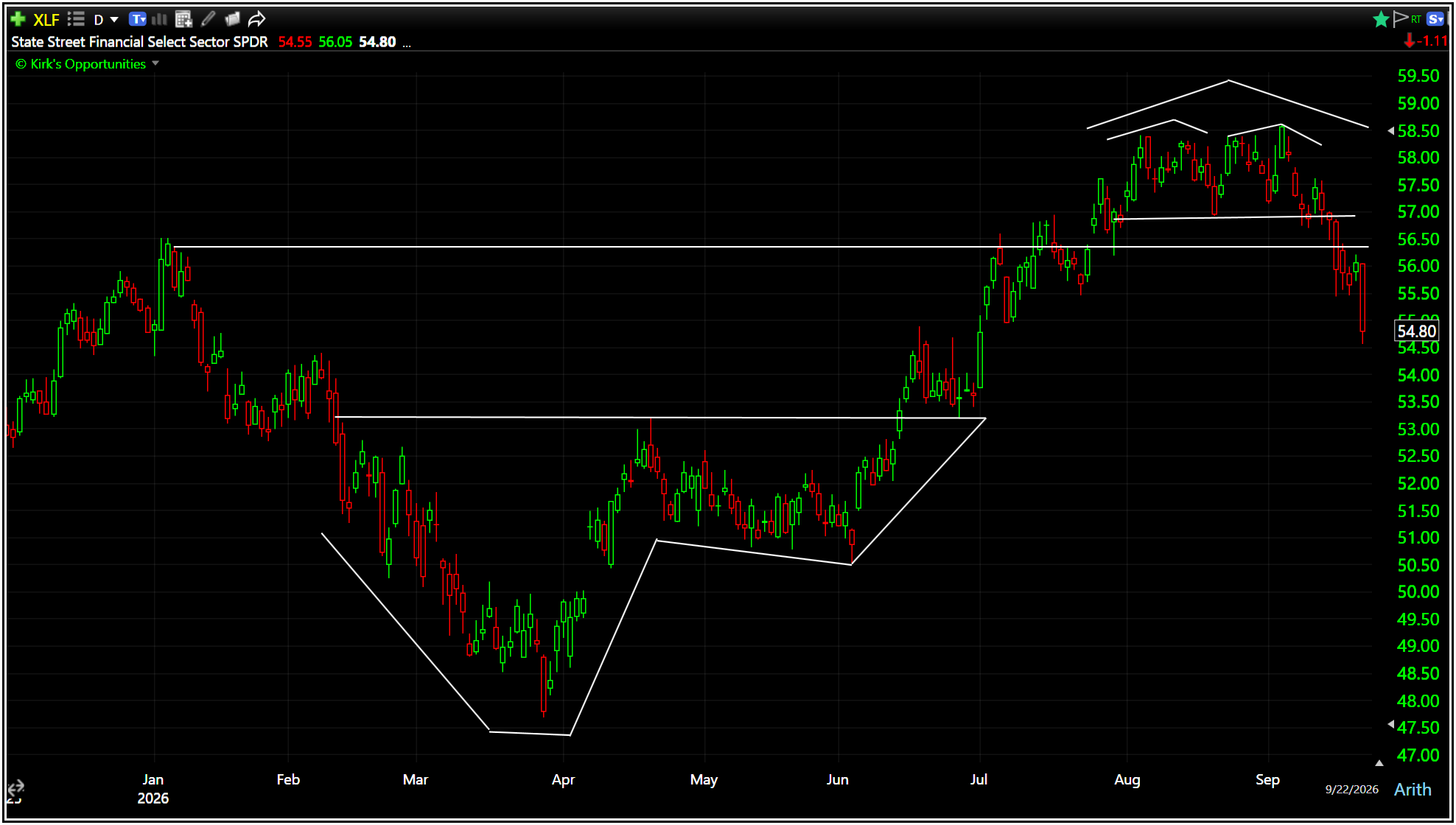
Financials were Tuesday’s clearest weak spot.
XLF fell roughly 2%, SCHW dropped more than 6%, while JPM, WFC, ALL and other financial names came under pressure.
Two issues entered the discussion: the flatter Treasury curve and the possibility that increasingly capable AI agents eventually disrupt portions of wealth management, insurance and financial distribution.
For now, financials remain one of the clearest groups failing to confirm the Nasdaq’s strength.
THE REAL STORY: DISPERSION
Tuesday was neither broadly bullish nor broadly bearish.
The Nasdaq reached another record.
Semiconductors surged.
Financials were hammered.
Small and midcaps advanced.
Several sectors outside technology participated.
And at the individual-stock level, very strong winners existed alongside very weak losers.
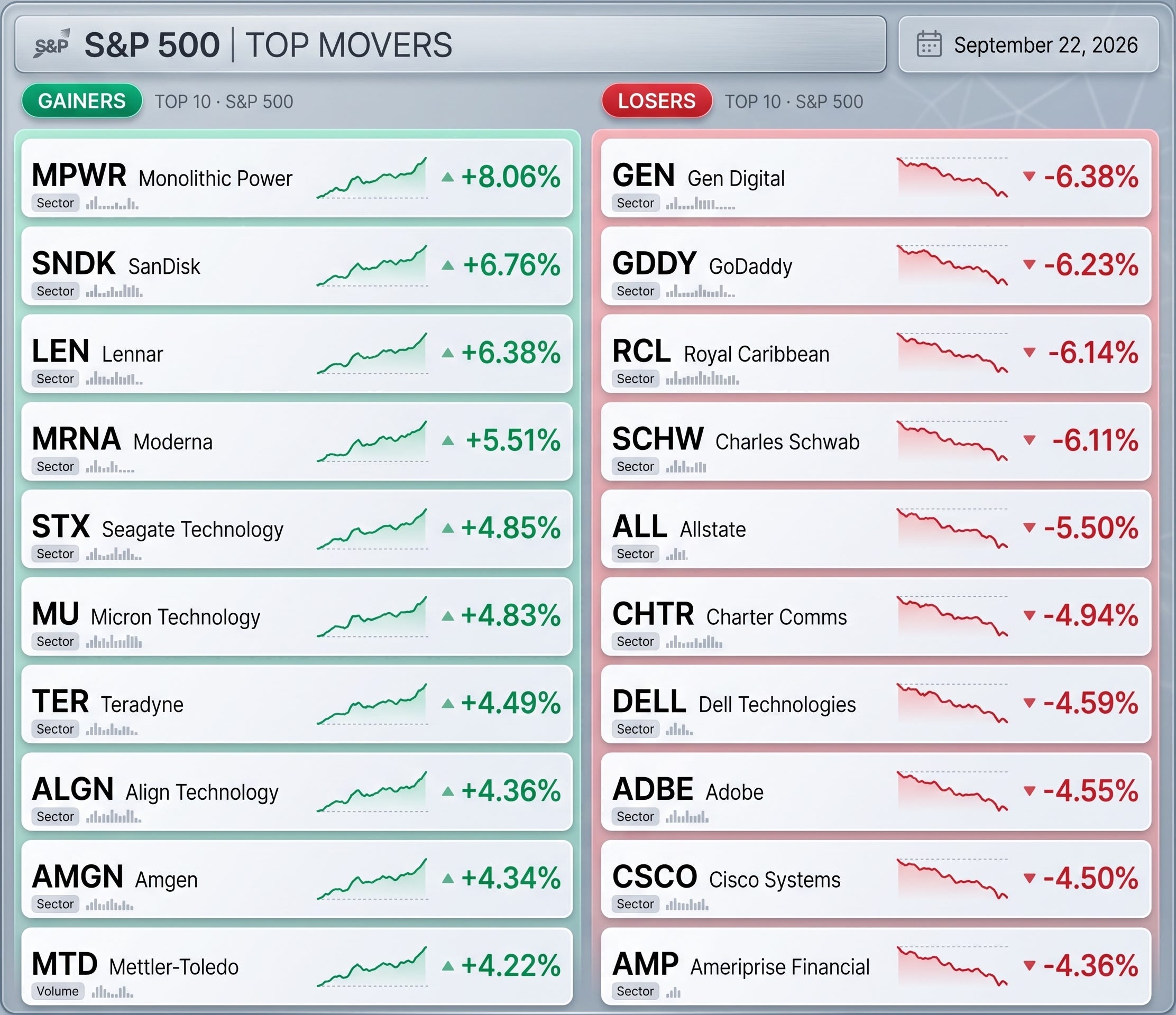
That may be the best picture of Tuesday’s market.
The unchanged S&P 500 concealed enormous movement underneath.
For active investors, stock and industry selection mattered far more than the headline index return.
BREADTH CHECK
This remains the contradiction we cannot ignore.
Price is improving faster than the market underneath it.
The S&P 500 is near its highs, yet more constituents have recently been making 52-week lows than highs. Growth versus value has also surged sharply, reinforcing how selective leadership remains.
Tuesday offered some encouragement. Small and midcaps advanced, several sectors participated beyond technology, and advancers improved.
But broader confirmation remains incomplete.
The outcome we want is straightforward:
More stocks improve toward the indexes—not the indexes eventually fall toward weak breadth.
For now:
Participation is improving. It has not yet been repaired.
TWO MACRO PRESSURES ARE EASING
Oil and Treasury yields have been two of the most important pressure points in our recent framework.
Now both are backing away.
Brent: below $100
WTI: around/below $95
10-year Treasury: below 5%
The exact daily ticks matter less than the change in direction.
The recent combination of $100+ oil and a 5%+ 10-year yield was working against valuations. That combination has started to unwind.
The chain becomes friendlier if that continues:
Oil ↓ → Inflation pressure ↓ → Fed pressure ↓ → Yields ↓ → Valuation pressure ↓
That does not solve every market problem, but it removes an important headwind.
AI IS DISRUPTING AGAIN
Agentic AI is becoming much bigger than an AI-stock story.
Meta’s Muse is forcing investors to rethink businesses that benefit from consumer friction.
The emerging question is no longer simply:
Who uses AI?
It is:
Whose economics depend upon customers being too busy, uninformed or unwilling to shop around?
Insurers, telecom providers, subscription businesses, travel platforms and financial services could all face pressure if agents can continuously comparison-shop, cancel subscriptions, renegotiate bills and switch providers.
That could eventually become an investment framework of its own:
Agentic AI → less consumer friction → winners and losers across entire industries.
At the same time, the enormous capital required to build AI infrastructure is pushing credit quality, leverage and free cash flow higher on our list of things to monitor.
AI is simultaneously becoming a bigger opportunity—and a more demanding financial exercise.
IMPORTANT STOCK MOVES
AI Infrastructure / Leadership
Micron (MU): +5%. Memory emerged as one of the strongest areas of the AI infrastructure trade. The broader implication is that investors increasingly expect inference demand to benefit memory alongside compute.
SanDisk (SNDK): nearly +7%. Continued strength adds another piece to the memory/storage side of AI infrastructure.
Monolithic Power Systems (MPWR): roughly +8%. Power delivery remains one of the less obvious beneficiaries of growing AI compute density.
Vicor (VICR): +13.7%. A sharply improved revenue outlook tied to Vertical Power Delivery royalties reinforced the AI-power infrastructure theme.
Financials
Charles Schwab (SCHW): -6.1%; JPMorgan (JPM), Wells Fargo (WFC): more than -3%. Financials became Tuesday’s major weak spot as investors reacted to the flatter yield curve and concerns that AI agents could eventually disrupt portions of financial distribution and wealth management.
Health Care
Viking Therapeutics (VKTX): +30.7%. Strong VK2735 maintenance data showed patients preserving most prior weight loss with less frequent dosing, strengthening the company’s competitive positioning in obesity drugs.
Consumer
On Holding (ONON): +10.2%. Management targeted at least CHF 5.6 billion in 2029 sales, a 22% adjusted EBITDA margin and announced a $1 billion repurchase authorization.
After Hours
KB Home (KBH): weaker after hours. Fiscal Q3 EPS of $1.05 beat expectations and $1.30 billion of revenue was roughly in line, but revenue declined 20% year over year and the full-year sales outlook came in below consensus.
HOW WE’RE APPROACHING IT
Strong indexes do not require us to become aggressively bullish everywhere.
We can respect the breakout while remaining selective. In fact, a market with large differences between winners and losers makes selectivity more valuable.
The response is not to chase stocks already extended after several strong sessions.
We want to identify the strongest groups, wait for controlled pullbacks or tight consolidations, and then average up when the market confirms our hypothesis.
That keeps us participating without pretending risk disappeared.
LEARN & GROW
Technology Humiliates Certainty
One of the hardest things about investing in technological change is that even brilliant people can be right about the direction and completely wrong about the timing—or wrong altogether.
History is full of examples.
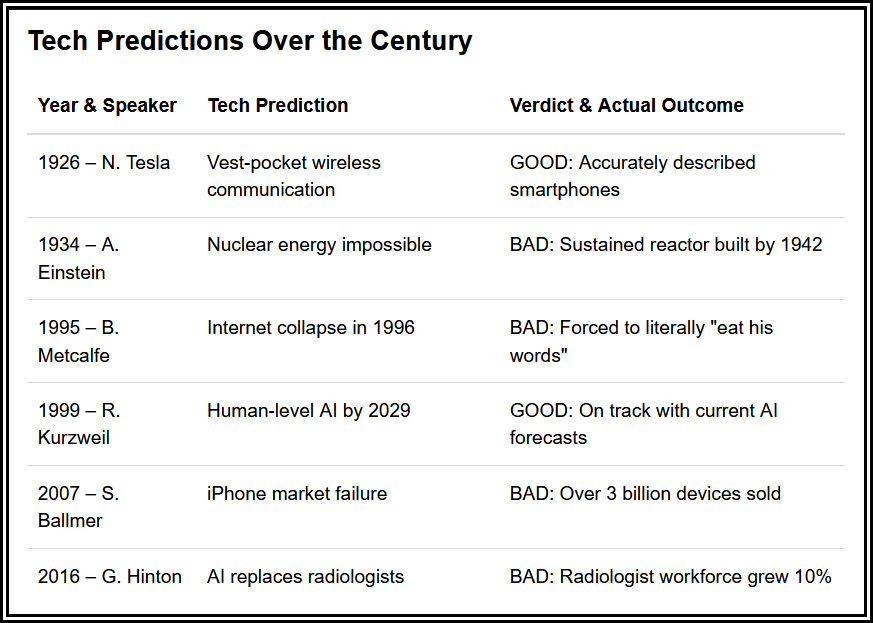
The lesson for us is simple:
Avoid false precision.
We do not need to know exactly what AI will look like in five or ten years to recognize that it is changing where capital is being spent, where bottlenecks are forming, and which companies are gaining or losing economic relevance.
As active investors, our job is not to predict the future perfectly.
It is to watch what is actually happening, follow the evidence, and adjust as the technology and the market reveal themselves.
Takeaway: Be open-minded about transformative technology, skeptical of confident timelines, and willing to update when reality disagrees with the forecast.
MIXER
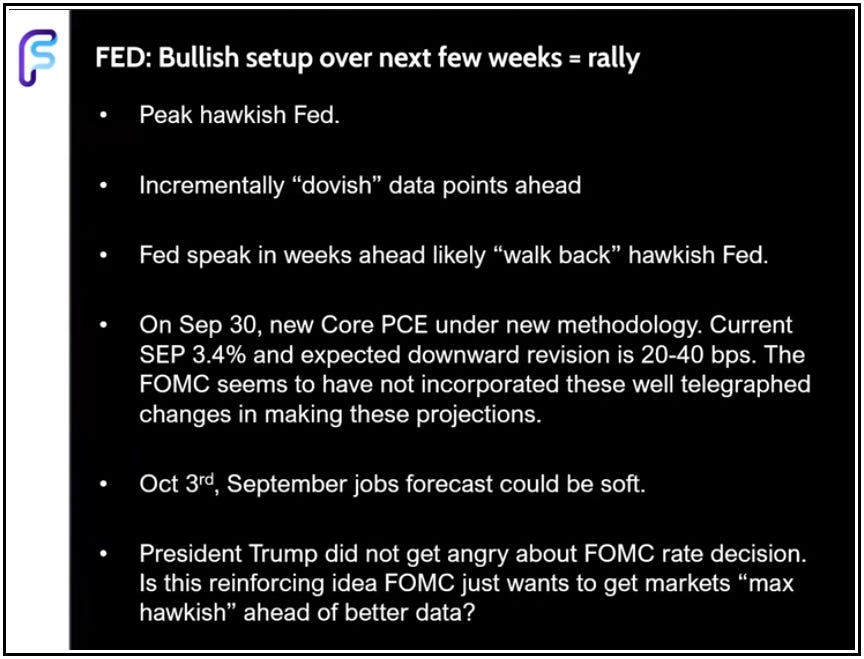
Goldman thinks markets may be too hawkish. Goldman economist Jan Hatzius expects another Fed hike in October, but argues markets may be extrapolating the recent inflation shock too far. His view is that recovering Middle East oil exports and fading temporary inflation pressures could limit how much further the Fed ultimately tightens. For us, the chain remains simple: Oil → Inflation → Fed → Yields → Valuations → Breadth → Price. If oil keeps falling and yields stabilize, an important market headwind weakens. (Source: Dark Side Of The Boom / Goldman Sachs)
Tom Lee sees a test of the Fed’s hawkish turn. Lee argues that September’s market churn and the recent rate hike may have created a more favorable risk/reward setup if inflation cools and the Fed eventually softens its tone. The next important tests arrive with PCE inflation on September 30 and the September jobs report shortly afterward. Cooler inflation alongside steady employment would strengthen the thesis; persistent price pressure would challenge it. (Source: Tom Lee)
AI concentration is still a vulnerability. Since ChatGPT launched, roughly three-quarters of the S&P 500’s market-value increase has come from about 20 companies, most tied closely to the AI theme. That concentration has rewarded investors while leadership remains strong, but it also increases the market’s dependence on a relatively small group of stocks. (Source: Bloomberg)
China’s AI-compute ambitions are accelerating rather than fading under export controls. Alibaba’s Zhenwu V900, enormous model plans and 20-GW data-center target reinforce the idea that U.S.-China AI competition will continue driving capital spending.
Edge/on-device AI could become another important branch of the investment cycle. Apple is pitching new high-end Macs as a cheaper alternative to continually renting cloud AI capacity, with systems capable of running large models locally and avoiding per-token charges. That introduces another potentially important branch of the AI cycle: moving inference from expensive centralized clouds toward local computing. (Source: Reuters)
Muse may be turning agentic AI into a genuine economic platform. Roughly 2.8 million downloads in 12 days, premium subscription tiers, Shop Pay integration and PayPal connectivity mean we can finally begin discussing agent revenue and transaction volume, not merely AI engagement.
Cybersecurity may be one of the best second-order AI themes. Palo Alto’s new service uses frontier AI models offensively to discover vulnerabilities before attackers do. As agents gain more permissions—to buy, browse, access corporate systems and eventually control physical processes—the Secure layer becomes more valuable, not less. If you don’t already own exposure to this industry, you should.
Earnings still have the final say. Debt, inflation, geopolitics and rates matter most when they eventually affect corporate earnings. With valuations elevated, the bigger risk is not simply another bearish headline—it is that forward earnings estimates begin rolling over. As long as earnings expectations remain strong, the market retains fundamental support. If they weaken materially, elevated valuations become much harder to defend. (Source: Lance Roberts)
FOMO may be returning—and AI may be entering its next phase. Goldman’s Rich Privorotsky noted an unusual combination Monday: the Nasdaq rose while implied volatility also increased. Normally volatility falls when stocks rally, so rising together can signal investors are paying up for upside exposure. More interestingly, the AI opportunity may be expanding beyond chips, memory, networking and power into the commercial rails agents need to act—payments, settlement networks, proprietary data and systems of record. The first AI phase rewarded companies building the machines; the next may increasingly reward the infrastructure those machines must use. (Source: Dark Side Of The Boom / Goldman Sachs)
Bitcoin’s nearly $1 billion ETF inflow gives Monday’s breakout more credibility. Price moves driven primarily by short covering can disappear quickly. Broad ETF demand from IBIT, ARKB and FBTC suggests institutional capital was participating at the same time. Holding $85000 would strengthen that evidence further.
Saudi Arabia’s pipeline restart matters more than another geopolitical headline. The market has spent weeks worrying about physical energy constraints. Restoring a route capable of bypassing Hormuz changes actual supply logistics rather than merely sentiment. That helps explain why oil fell despite unresolved regional risk.
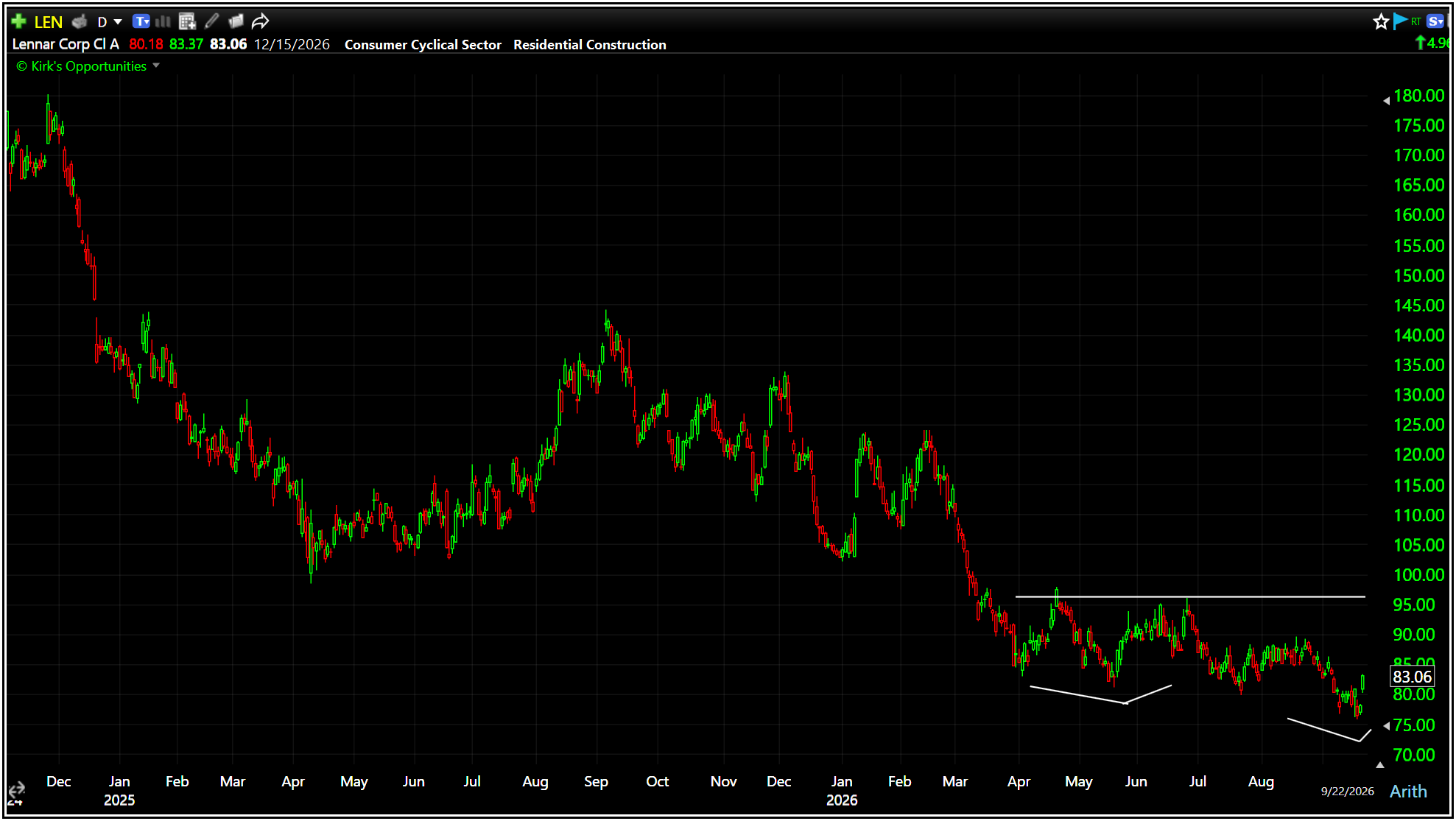
KB Home is a reminder that falling oil does not solve affordability. Mortgage rates remain high, revenue fell 20%, and orders declined 12%. Housing could improve if long yields continue falling, but the operating data do not yet say the affordability problem is over. That said, Berkshire Hathaway has been buying millions of shares of homebuilder Lennar (LEN), attempting to carve out a bottom. Good luck Greg Abel!
WEDNESDAY’S CATALYSTS
Tomorrow’s two biggest catalysts for us: PMI in the morning and Meta Connect after the close.
S&P Global Flash U.S. PMI — 9:45 a.m. ET
This is tomorrow’s most important scheduled macro release.
We’ll be watching manufacturing and services activity, but especially input costs, selling prices, hiring and whether services remain strong without another acceleration in inflation.
Earnings Before the Open
Cintas (CTAS), Paychex (PAYX), General Mills (GIS), Cracker Barrel (CBRL).
CTAS and PAYX can provide useful reads on employment, wages and business activity, while GIS and CBRL offer another look at consumer demand and pricing.
Federal Reserve Governor Michael Barr
Any comments touching on inflation, rates, housing or the broader economic outlook could matter given the market’s sensitivity to Treasury yields and monetary-policy expectations.
Meta Connect — 4:00 p.m. PT
This may be Wednesday’s most interesting company-specific catalyst following the reaction to Muse.
We’ll be watching:
AI
Muse
Agentic commerce
Wearables
Smart glasses
Monetization
The larger question is whether Meta gives us additional evidence that AI products are moving from heavy investment toward measurable economic activity.
SCENARIO FRAMEWORK
Bull Case: S&P 500 clears 7816, SPY holds above 775, Nasdaq 100/QQQ maintain leadership, new highs begin exceeding new lows, RSP and IWM improve, oil remains contained and the 10-year stays below 5%. (40% probability)
Base Case: S&P 500 remains between 7620 and 7816 while AI and semiconductor leadership continue producing opportunities but breadth, financials and the Fed prevent a clean broad-market breakout. (45% probability)
Bear Case: S&P 500 fails again near 7816, loses 7620, oil and yields reverse higher, HYG weakens and the remaining AI leaders begin rolling over. (15% probability)
What Would Weaken the Setup?
A rejection around 7816 is manageable.
A rejection followed by a loss of 7750 would deserve attention.
A subsequent loss of 7620 would be considerably more important.
The bigger warning remains:
Breadth deteriorates + HYG weakens + 10-year >5% + oil >$100 + AI leadership breaks.
If financial weakness spreads into semiconductors and mega-cap technology, the quality of the entire market changes.
THE TAKEAWAY
Tuesday reinforced a market that is improving on price faster than it is improving underneath the surface.
The Nasdaq is making new highs. Semiconductors, memory and AI infrastructure continue leading. Small caps may be trying to repair. Oil and Treasury yields are moving in the market’s favor.
But breadth still needs to prove itself, financials are sending a different message, and many of the strongest stocks are already extended.
Our approach remains straightforward:
Follow the strength. Let breadth prove itself. Don’t chase extension. Watch credit, oil and yields. And keep looking for the next opportunity where price is only beginning to confirm the thesis rather than where everybody already sees it.
MEMBERS ONLY
And finally, there is a chart that stood out to me being one to keep a very close eye on as we navigate the rest of the week and month. That chart is…